

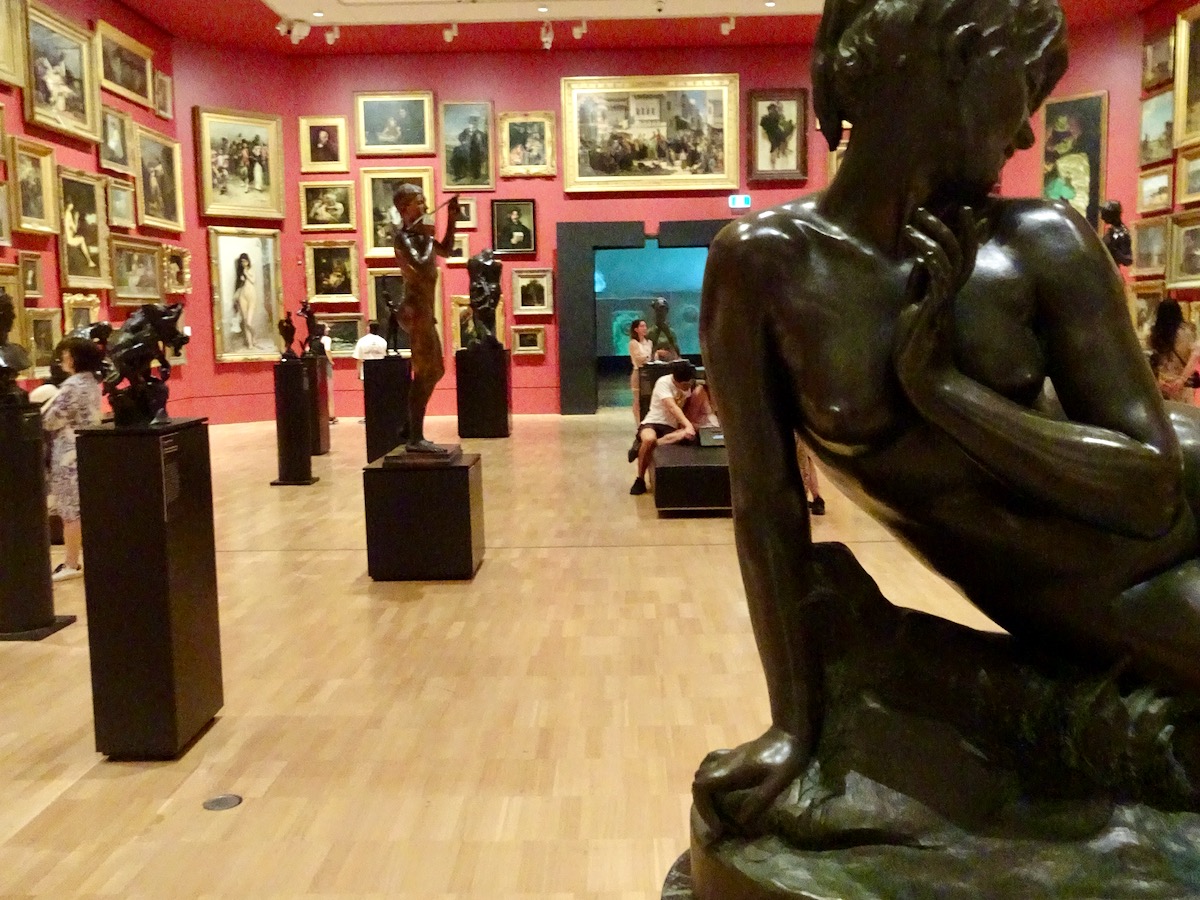
You’re in Melbourne and eager to explore some Greek-Roman artwork to ignite your imagination. If this is the case and you’re into ancient history and spectacular art, the National Gallery of Victoria (NGV) is a must-visit destination. They boast an impressive collection of Greek and Roman masterpieces that instantly transport you back to the days of gods, heroes, and epic myths. In this NGV art guide, I’ll take you through some of the standout pieces I encountered — but believe me, there’s plenty more amazing artwork to discover in these incredible NGV galleries.
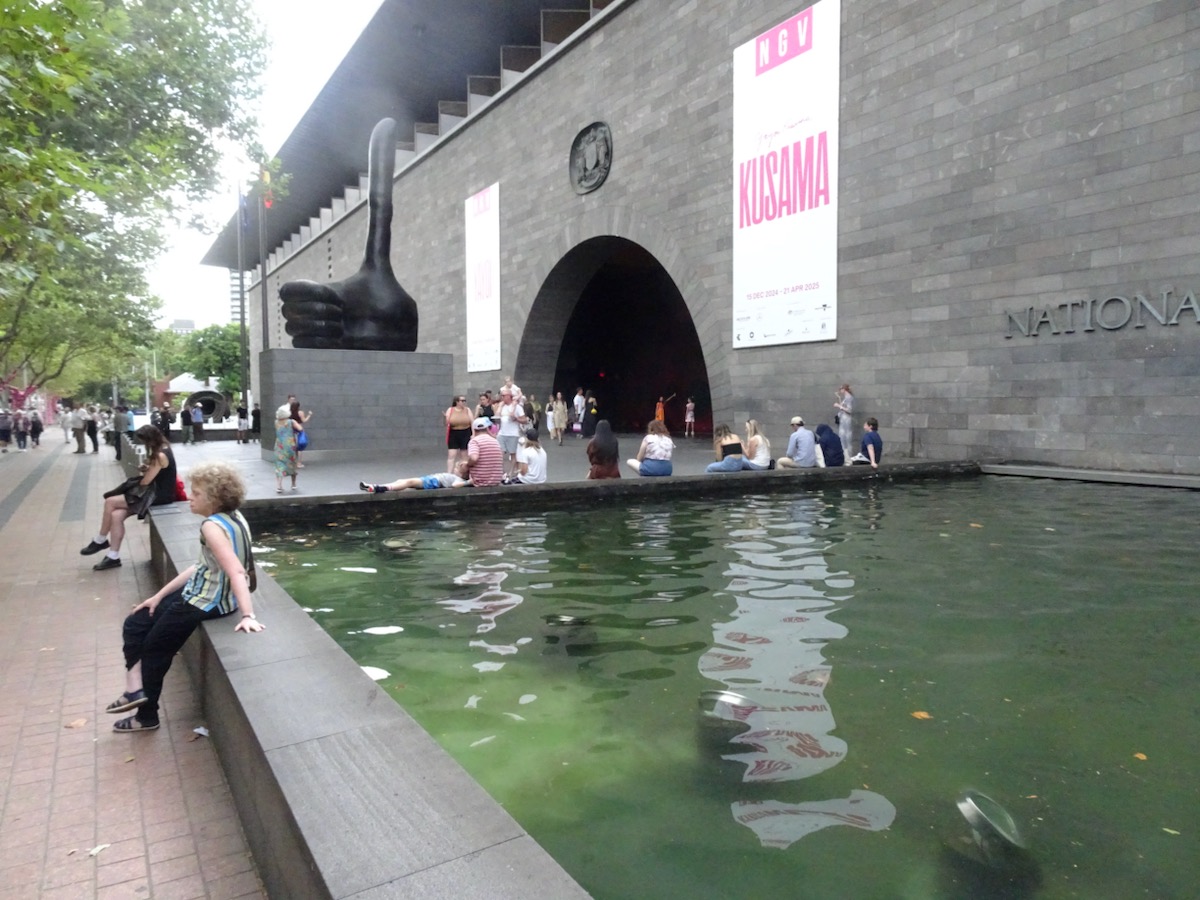
Surprising fact: The NGV is actually split across two buildings, each with its own unique vibe. You’ll find NGV Australia at Federation Square, which is fantastic in its own right. However, the heart of the Greek-Roman collection is at NGV International, located at 180 St Kilda Road.
Here’s a picture of the NGV International building — just walk through the large archway, and you’ll find yourself inside.
It’s just a short, pleasant walk between NGV Australia and NGV International, making both venues easy to explore. During my visit to NGV Australia, I was captivated by a remarkable piece rooted in Greek mythology — a bronze sculpture portraying Circe, the enchanting sorceress from Homer’s Odyssey. Her presence alone makes NGV Australia a must-see destination.
The NGV’s Greek-Roman collection extends far beyond exquisite sculptures. You will also find stunning paintings and intricate pottery featuring Greek-Roman themes. Whether you’re a lover of Greek mythology, history, or simply appreciate breathtaking art, this collection is a treasure trove of stories waiting to be explored. In this guide, you’ll see some highlights that truly caught my eye during my visit to NGV Australia and NGV International.
NGV Australia: Greek-Roman Art Guide
NGV Australia, located inside the Ian Potter Centre at Federation Square in Melbourne, is a must-visit for anyone interested in Australian art and culture. Opened in 2002, it’s part of the National Gallery of Victoria — Australia’s oldest and largest public art museum, founded in 1861.
The centre highlights a wide variety of Australian artworks, from Indigenous pieces and contemporary works to historical artifacts that tell the story of the nation’s rich cultural roots. Visitors can explore a diverse collection of paintings, sculptures, textiles, and other works that reflect Australia’s unique identity and artistic journey.
Although the focus is on Aussie art, there’s a surprising gem inside: a stunning piece from Greek mythology, Circe.
Circe: NGV Australia
Bertram Mackennal’s Circe (1893) stands as a timeless muse, her presence immortalized in sculpture. Echoing the enchantress of Greek myth, she embodies both cunning and formidable magic — with transformative powers that can turn men into beasts, forever capturing the mysterious allure of her mythic goddess.
Fortunately for Odysseus, also known as Ulysses, he was able to outwit Circe with the assistance of Hermes. For a more unusual interpretation of her myth, I highly recommend checking out the crazy Ulysses: Heavy Metal comic, which depicts her story in the most psychedelic way.
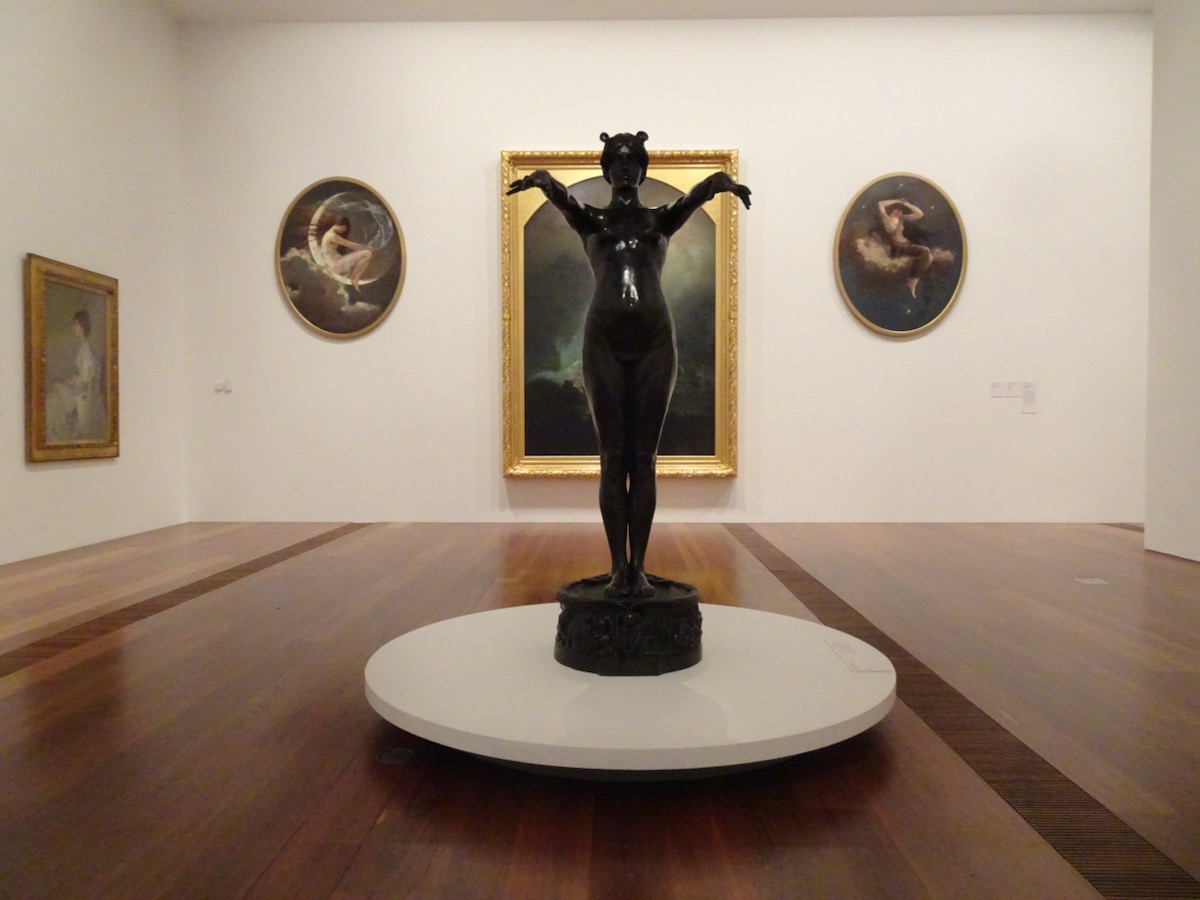
What makes this piece particularly compelling is how it seamlessly blends classical influences with a contemporary edge. It incorporates a modern sensibility that invites reflection on themes of power, transformation, and the mysteries of the universe.
NGV Australia has done a fantastic job showcasing Circe, ensuring she’s accessible and engaging for all visitors — whether you’re a mythology enthusiast or simply someone who appreciates striking art.
During my visit, Circe was accompanied by two oval paintings on the wall behind her — on the left, titled “The Spirit of the New Moon,” and on the right, “The Spirit of the Southern Cross.” Directly behind her was another enigmatic artwork that evoked a sense of Greek mythology, though I couldn’t quite discern which myth it depicted until I read its title.
The Sirens: NGV Australia
The mesmerizing greenish-toned painting, The Sirens, by John Longstaff, is truly a captivating piece. Longstaff masterfully brings the scene to life, immersing you in the haunting call of the sirens and evoking a powerful sense of both danger and beauty. It’s a work that lingers in your mind, thanks to its intriguing mood and unconventional expression, making it a standout masterpiece.
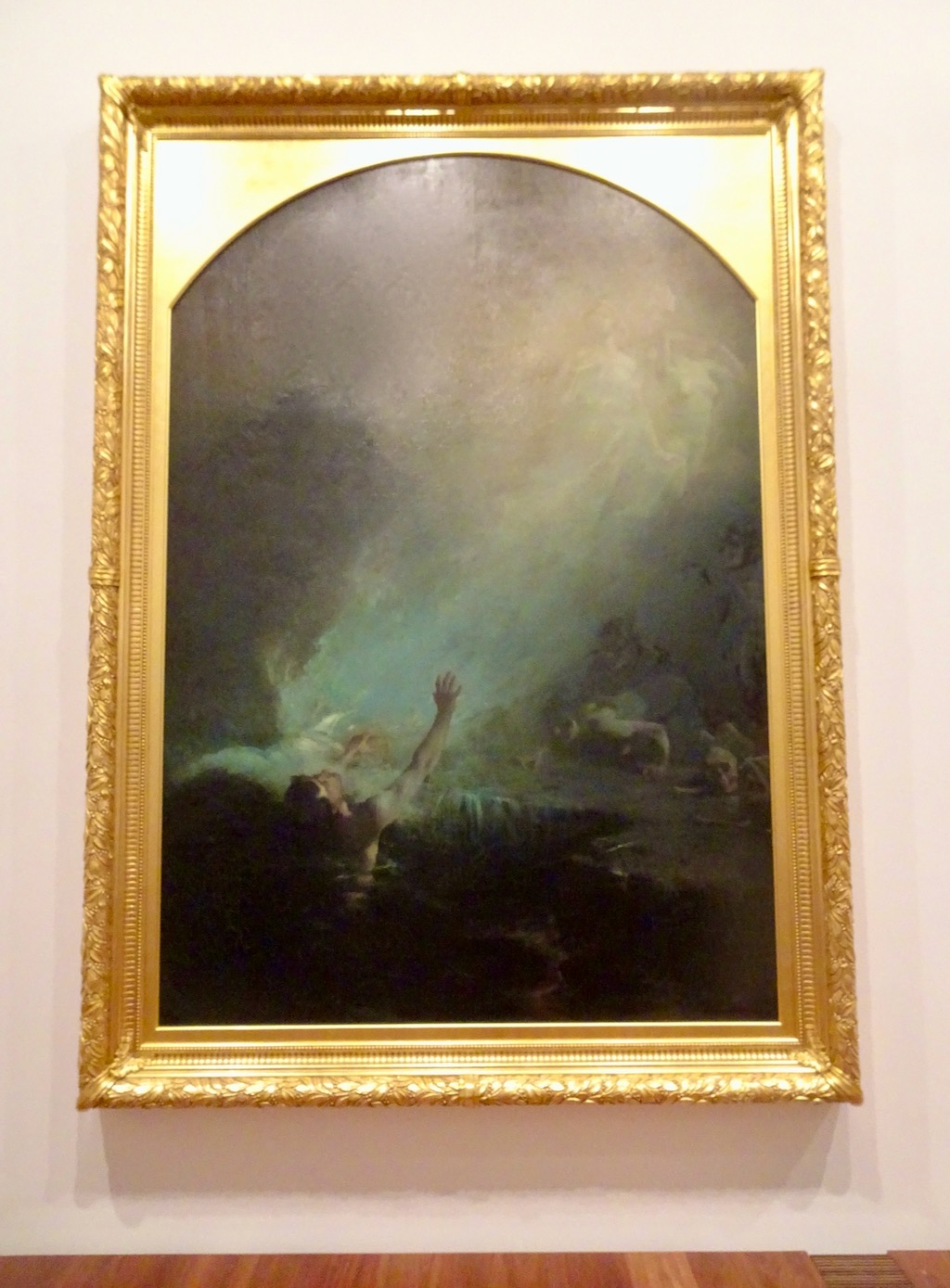
The substantial frame crafted for John Longstaff’s “The Sirens” is equally striking. Designed in 1994 to showcase the painting, this frame draws inspiration from the original frame of his 1861 masterpiece, “Arrival of Burke, Wills and King at Cooper’s Creek.” Although the original frame was discovered in fragments that same year, it was notably missing its distinctive arched slip section, adding a layer of historical intrigue.
In Homer’s Odyssey, the Sirens are enchanting songstresses whose voices weave irresistible melodies that lure sailors to their doom, promising bliss beyond imagination. But Odysseus, wise and cunning, orders his crew to plug their ears with beeswax and has himself bound to the mast, so he can savor their haunting song without falling under its deadly spell. In this perilous dance between desire and restraint, the Sirens embody the seductive power of temptation, forever echoing as a symbol of allure that tests the limits of human will.
Sailors who couldn’t overcome their urges to encounter the Sirens were thought to have seen their true form — totally ugly and repellent creatures.
NGV International: Greek-Roman Art Guide
Overall, I enjoyed visting NGV International much more than NGV Australia. It’s the best place to spend most of your time out of the two.
The National Gallery of Victoria is one of Australia’s premier art museums, boasting a jaw-dropping collection that spans centuries, continents, and styles. When you step inside, you’re immediately swept into a world of visual storytelling — think interesting paintings, ancient artifacts, contemporary masterpieces, and everything in between.
If you’re into Greek-Roman art, you’re in for a real treat. The NGV International has an impressive collection of classical inspired sculptures, paintings, and pottery.
Beyond the art itself, NGV International’s architecture is worth mentioning. The sleek, modern design complements the historic buildings nearby, creating a dynamic space for cultural exploration. Whether you’re into the ancient worlds of Greece and Rome or modern art experiments, NGV International offers a rich, engaging experience that makes you want to dive deeper into history and creativity. So, if you’re ever in Melbourne, this place should definitely be on the top of your list!
Rising Pumpkin: NGV International Artwork
One of the most awesome aspects of NGV International is its incredible variety of exhibitions. As soon as I stepped inside, I was captivated by this massive yellow sculpture called “Dancing Pumpkin,” adorned with black spots. At first glance, I had no idea what it was — just a bold, eye-catching piece. But once I learned its name, everything sort of clicked, and the artwork took on a whole new level of meaning.
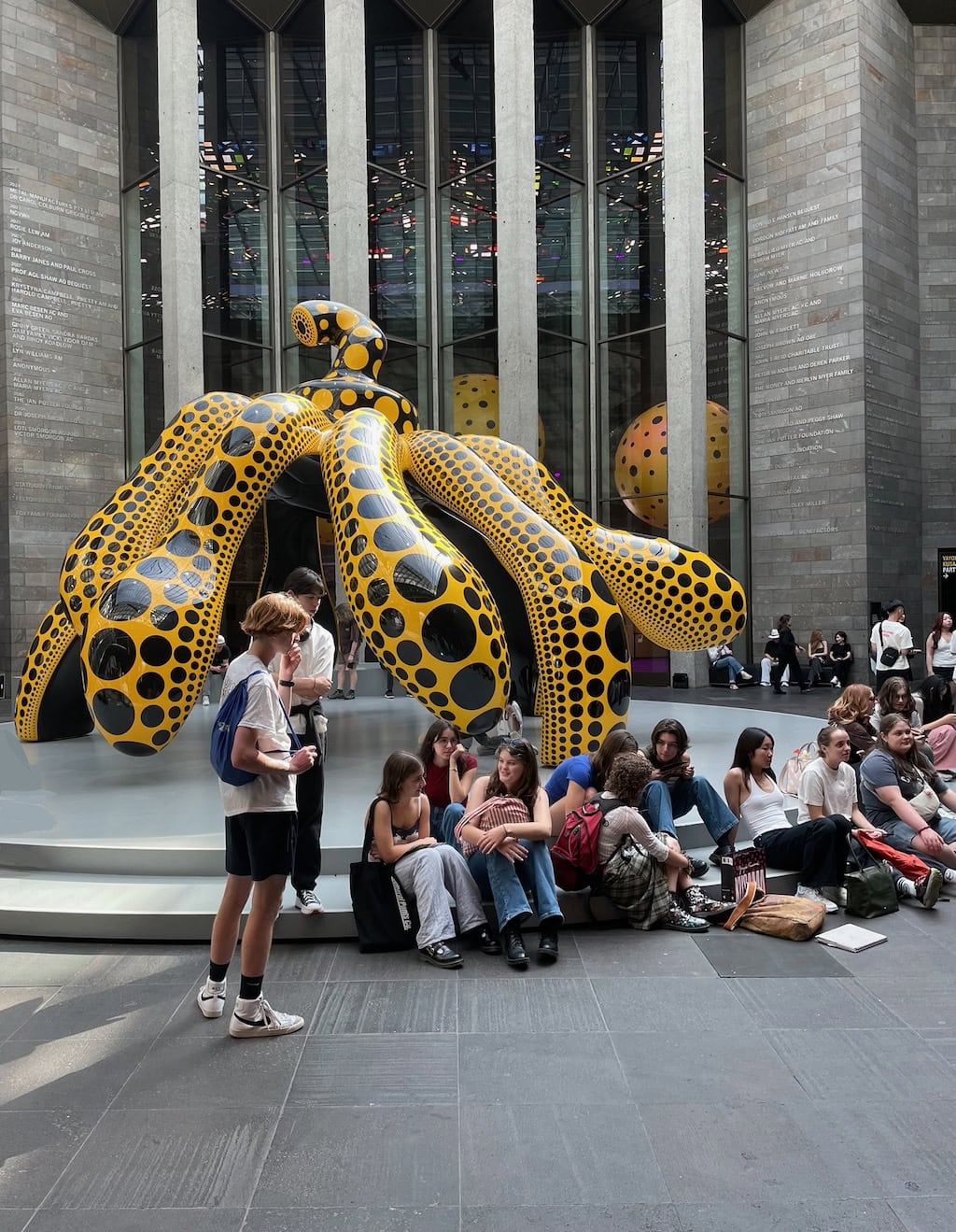
Interestingly, the English word “pumpkin” originates from the Greek term “pepōn” (πέπων), meaning “large melon.”
Ulysses and the Sirens: NGV International Artwork
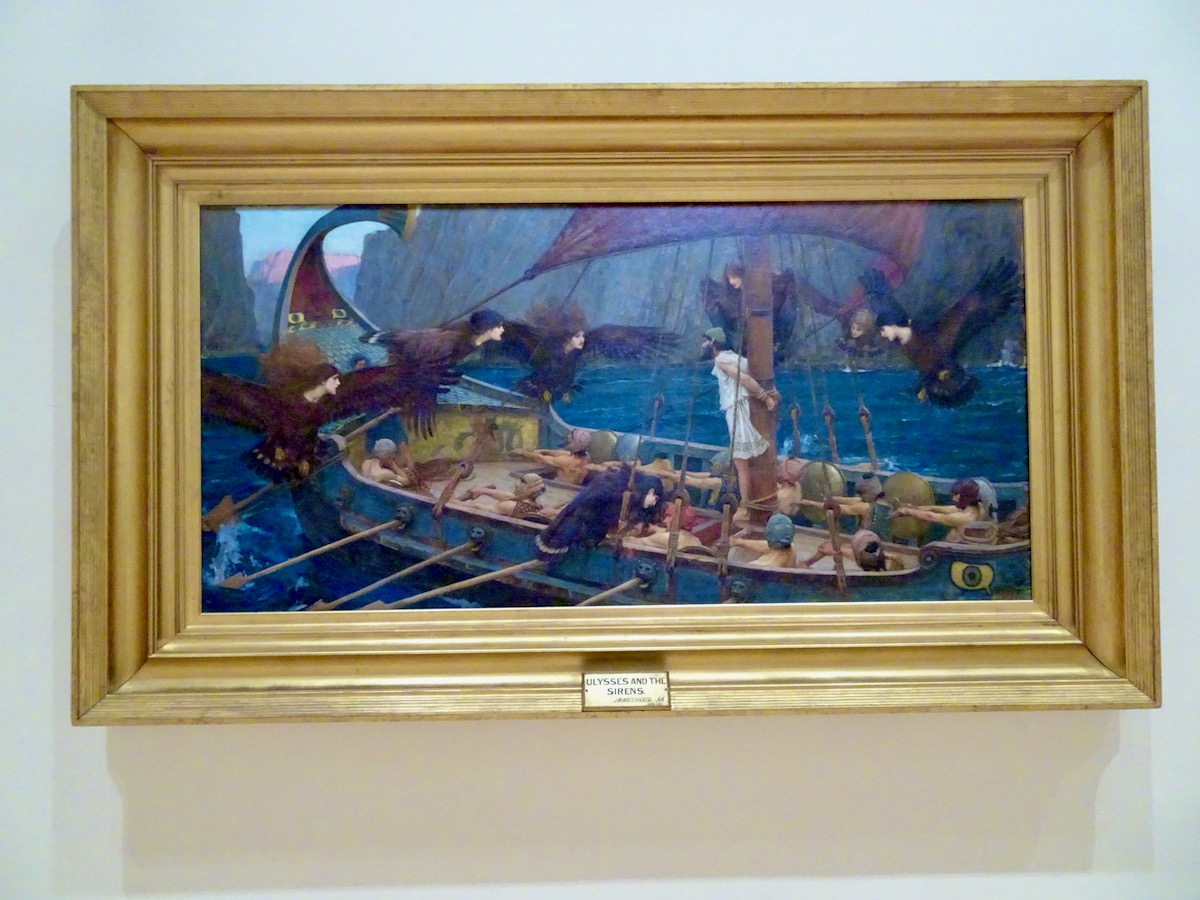
John William Waterhouse’s Ulysses and the Sirens shows an intense moment when Odysseus is tied to the mast of his ship, the Argo. The rest of the crew have their ears plugged with wax to block out the sirens’ song. You can see the sirens flying around the ship, desperately trying to stir up trouble and lure them in. It’s a really gripping scene full of tension.
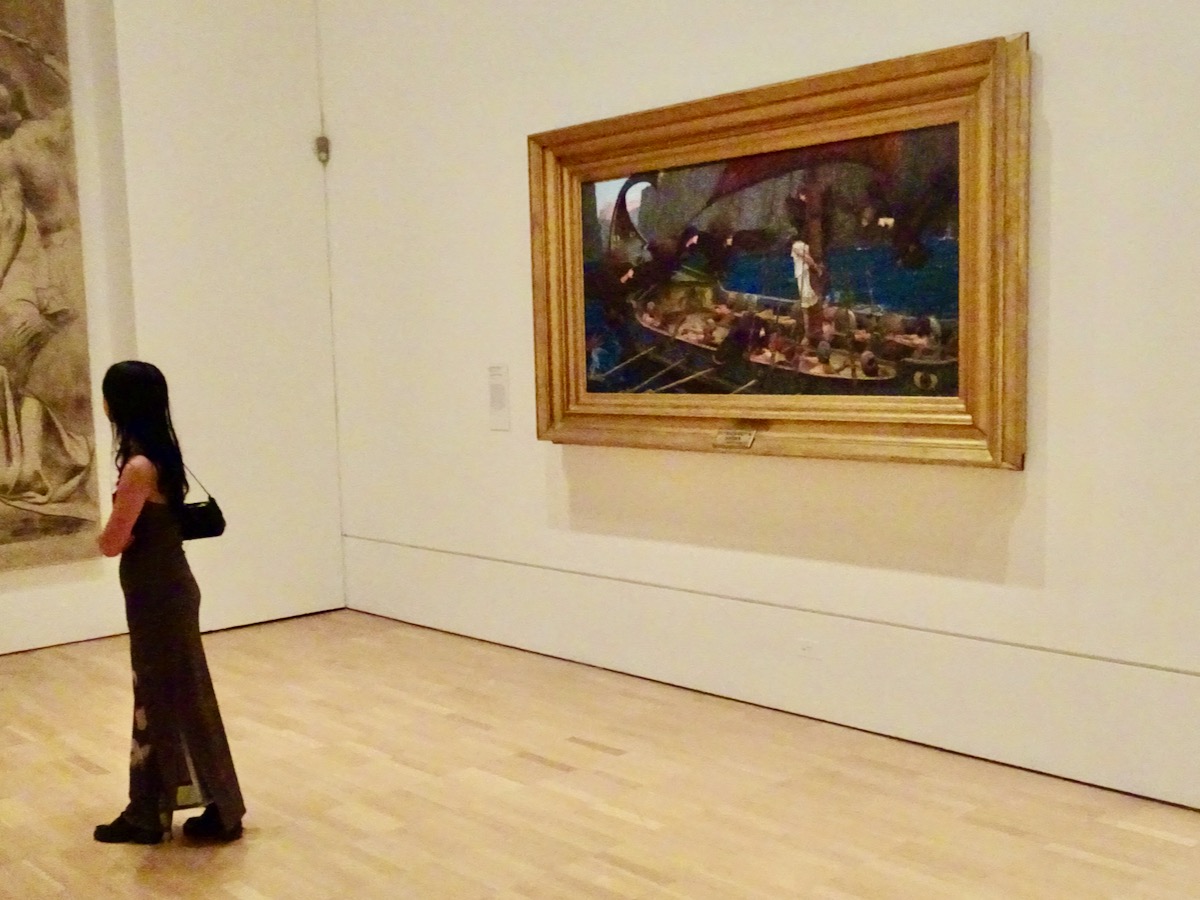
This impressive painting shows a scene from the Greek hero Odysseus’s journey, as told in Homer’s Odyssey, where the infamous sirens sing so beautifully that they lure sailors toward dangerous rocks and disaster. Odysseus wanted to hear their song, so he had his crew lash him to the mast and block their ears to keep everyone safe.
Waterhouse portrays each siren with the body of a bird and the head of a stunning woman, borrowing that motif from an ancient Greek vase that’s now in the British Museum in London.
Love is Blind: NGV International Artwork
Donato Barcaglia, a talented artist trained under Neoclassical sculptor Abbondio Sangiorgio at Milan’s Brera Academy, started as a painter before focusing on sculpture. He created detailed, striking works that stood out in a busy art scene.
He gained international fame, exhibiting in Vienna, Florence, and Philadelphia in the 1870s, with his piece Love is Blind (c. 1875) earning a gold medal at Florence and traveling worldwide. Many versions of his popular works were made, including the refined piece at NGV, possibly the one shown in Florence.
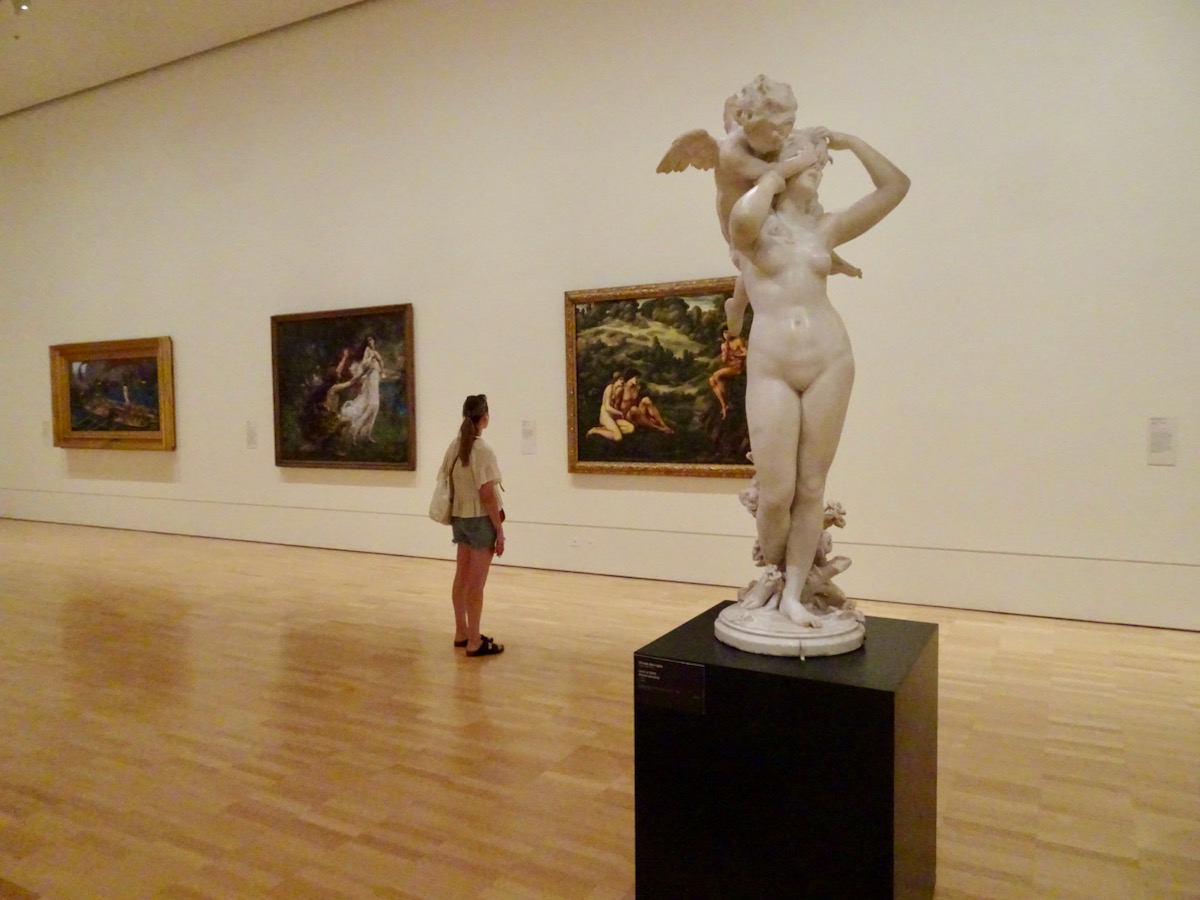
This life-size sculpture shows a semi-nude woman with a floral backdrop, with Cupid flying above, shielding her eyes — symbolizing matchmaking. The piece’s lively, delicate carving reflects Barcaglia’s skill and the influence of Canova, blending classical themes with dynamic execution.
The Garden of Pan: NGV International Artwork
Edward Burne-Jones loved blending different eras and styles — combining medieval, classical, and Renaissance imagery to create scenes that feel timeless and universal. In this piece, he depicts the Greek god Pan as a graceful, handsome young man.
If you have a closer look at the painting at the NGV, you’ll even notice that as Pan plays his music, a kingfisher and some dragonflies pause to listen to his enchanting tune. It’s a magical moment, suspended between different worlds.
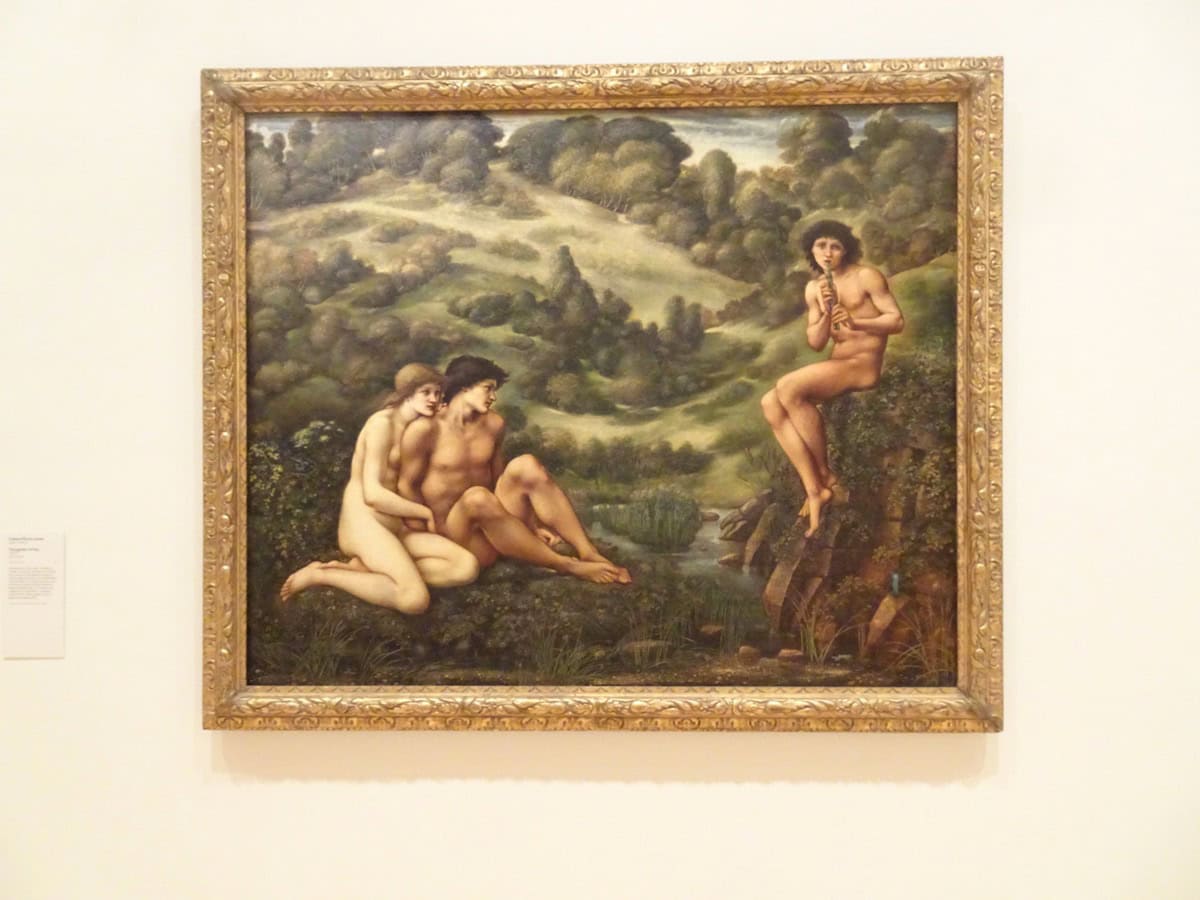
To find out more about Pan, explore: the Wild Pan Greek God Symbol and Powers.
Apollo and Daphne: NGV International Artwork
Apollo and Daphne, a stunning mythological masterpiece by Herietta Rae, was her standout piece at the 1895 Royal Academy exhibition and has since been beautifully added to the NGV Collection.
Despite facing criticism from Pre-Raphaelite male contemporaries like Leighton and Millais — possibly due to her support for feminism and women’s rights — Henrietta Rae’s work continues to shine.
The painting depicts Daphne’s transformation into a laurel tree to escape Apollo’s pursuit, a story from Ovid’s Metamorphoses.
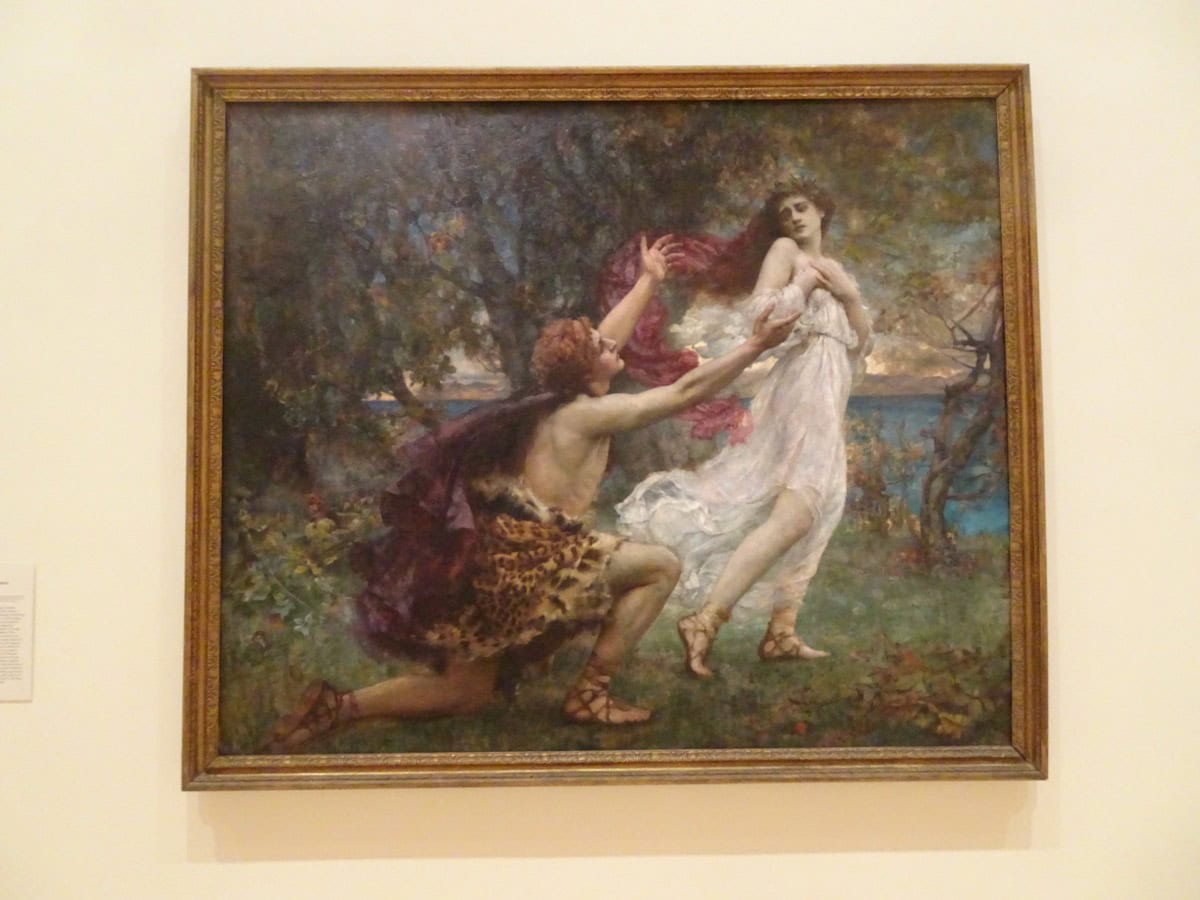
Acquired in 2021, Apollo and Daphne is now displayed in the 19th Century European Paintings Gallery, Level 2, NGV International.
The NGV also holds other works related to the Apollo and Daphne myth, including a plate from a series of landscapes by Anthonie Waterloo.
The Wheel of Fortune: NGV International Artwork
The Wheel of Fortune is an oil painting by British Pre-Raphaelite artist Edward Burne-Jones, created between 1875 and 1883. It blends classical and medieval themes to show how life’s ups and downs are like a spinning wheel — sometimes lifting us, sometimes crushing us.
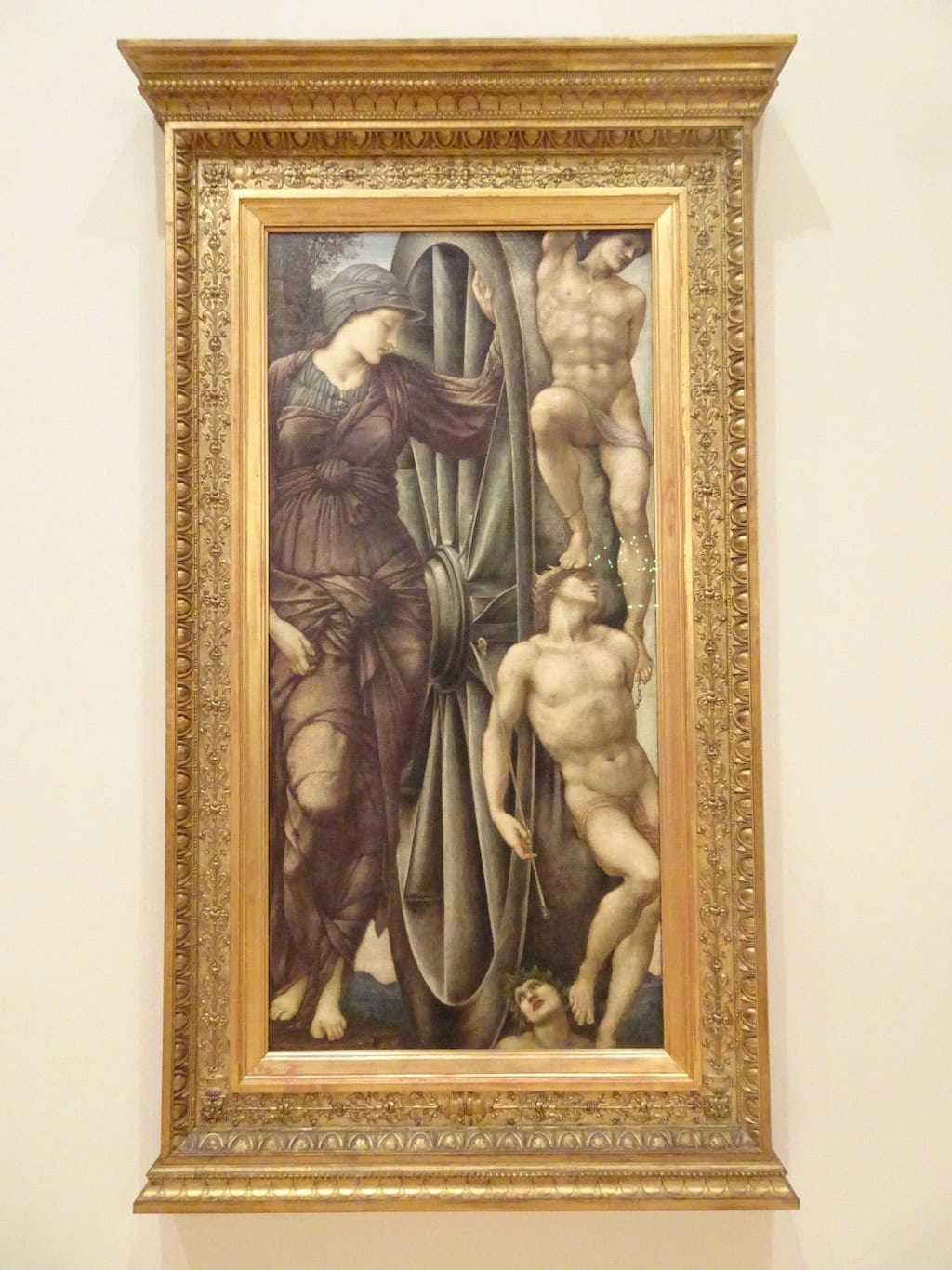
Burne-Jones said something like, “My wheel of Fortune is a true-to-life image; it comes to fetch each of us in turn, then it crushes us.” The main version has been at the Musée d’Orsay in Paris since 1980.
There’s also a smaller version made between 1871 and 1885, in Melbourne’s National Gallery of Victoria, acquired in 1909. It’s framed in a modern, gilded, tabernacle-style frame based on parts of the original.
Venus marble: NGV International Artwork
The Venus marble sculpture at the NGV by François Poncet was created in 1782 in Rome, Italy. Depicting the Roman goddess of love, beauty, and desire, Venus, this striking work draws on rich mythological and historical traditions.
Known as Aphrodite in Greek mythology, she embodies allure, romance, and the transformative power of love, making the sculpture a timeless symbol of elegance and passion.
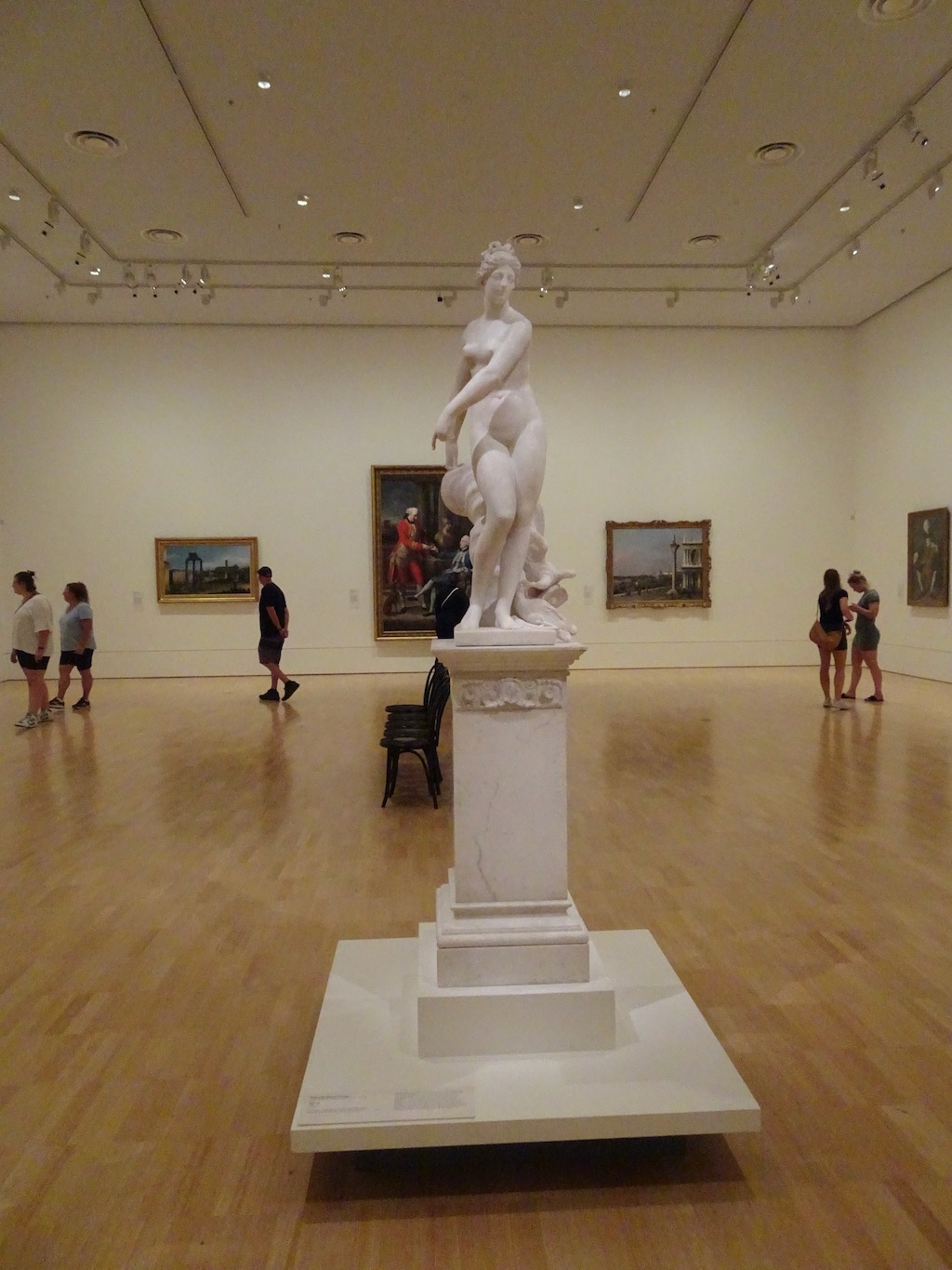
According to myth, Venus was born from the foam of the sea, emerging as an extraordinarily beautiful and stunning figure. She played a central role in numerous stories, symbolizing both physical beauty and emotional passion. She’s also known to be very jealous.
In Roman culture, Venus was venerated as a nurturing goddess who brought harmony and affection into people’s lives. Her stories reflect the complex nature of love — its capacity to inspire joy and chaos alike. As a goddess, Venus remains a timeless symbol of beauty’s power to unite and enchant.
Salvador Dali’s Trilogy of the Desert: Mirage
Trilogy of the Desert: Mirage marks a significant shift in Dalí’s art and is a key piece from his middle period. It was the main panel of a triptych created in 1946 for William Lightfoot Schultz, the founder of Shulton Cosmetics. The commission aimed to promote a new perfume and makeup line called Desert Flower.
The painting depicts a dry, desert-like landscape with strange, detailed Renaissance-style architecture that appears broken apart. In the middle, a desert flower blooms from a classical bust of Apollo Belvedere.
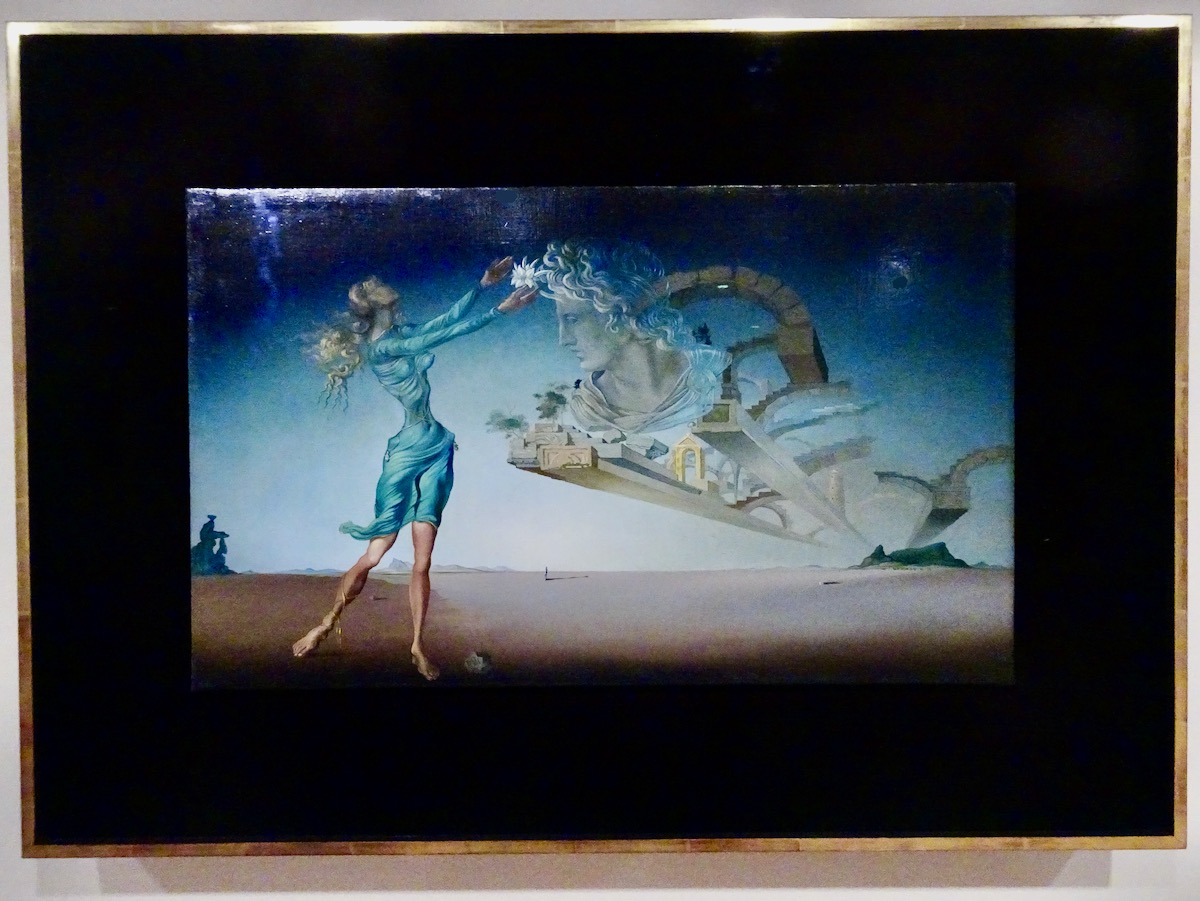
The other two paintings from the Trilogy of the Desert, called The Invisible Lovers and Oasis, are part of private collections. At of time of writing this guide, they’re not on public display, but they definitely add an intriguing touch to the story of the series.
Oedipus: NGV International Artwork
Oedipus (1931–1932) by Glyn Warren Philpot at the NGV is a cool, surreal-style painting. It shows Oedipus, the brave king of Thebes, who faced a tricky monster called the Sphinx. The Sphinx’s creepy voice asked him a riddle: “What walks on four legs in the morning, two at noon, and three in the evening?”
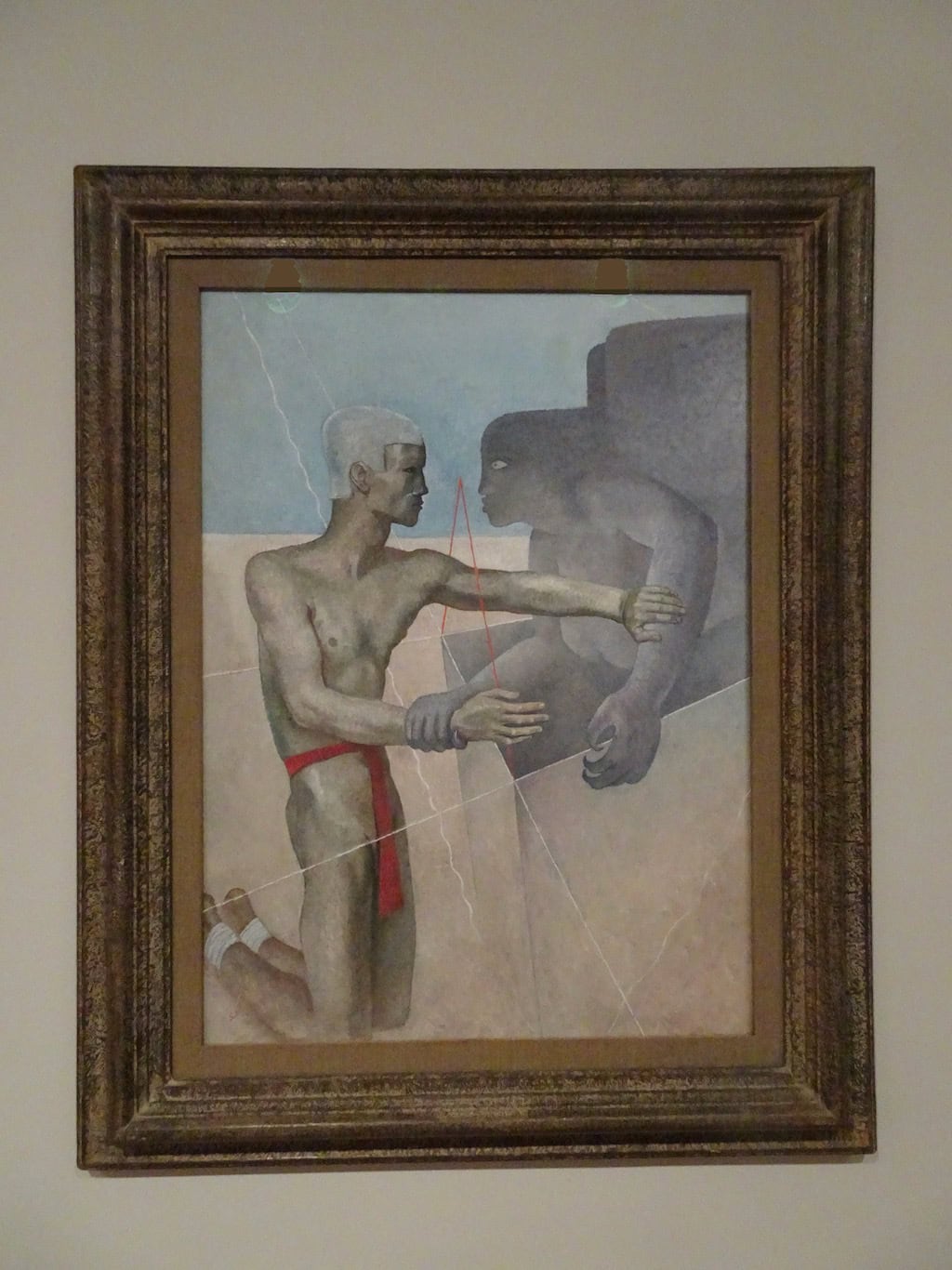
Oedipus’s sharp mind quickly deciphered the riddle: “A human — who is a baby crawling on all fours, an adult walking on two legs, and an old person with a cane.” His quick thinking not only saved Thebes from the terrifying Sphinx but also earned him the throne. However, there’s a twist — solving the riddle was only the beginning of a far more tragic journey.
Oedipus’s relentless quest for truth ultimately led to a heartbreaking conclusion. His cleverness in outwitting the Sphinx was both a great victory and a tragic omen of the destiny that awaited him.
Piazza d’Italia: NGV International Artwork
Giorgio de Chirico often used recurring imagery like dark voids, long shadows, and receding architecture. These elements created an ambiguous space for viewers to interpret personally. He saw this repetition not as copying but as creating variations, with small changes having a strong impact.
His 1953 painting, Piazza d’Italia, reflects themes from his early metaphysical period. It shows two silhouetted figures near arched buildings, with flat, colorful shapes. In the foreground is the classical sculpture Sleeping Ariadne, a common motif for Giorgio de Chirico. A train passes in the background against a sky that shifts from blue-green to yellow.
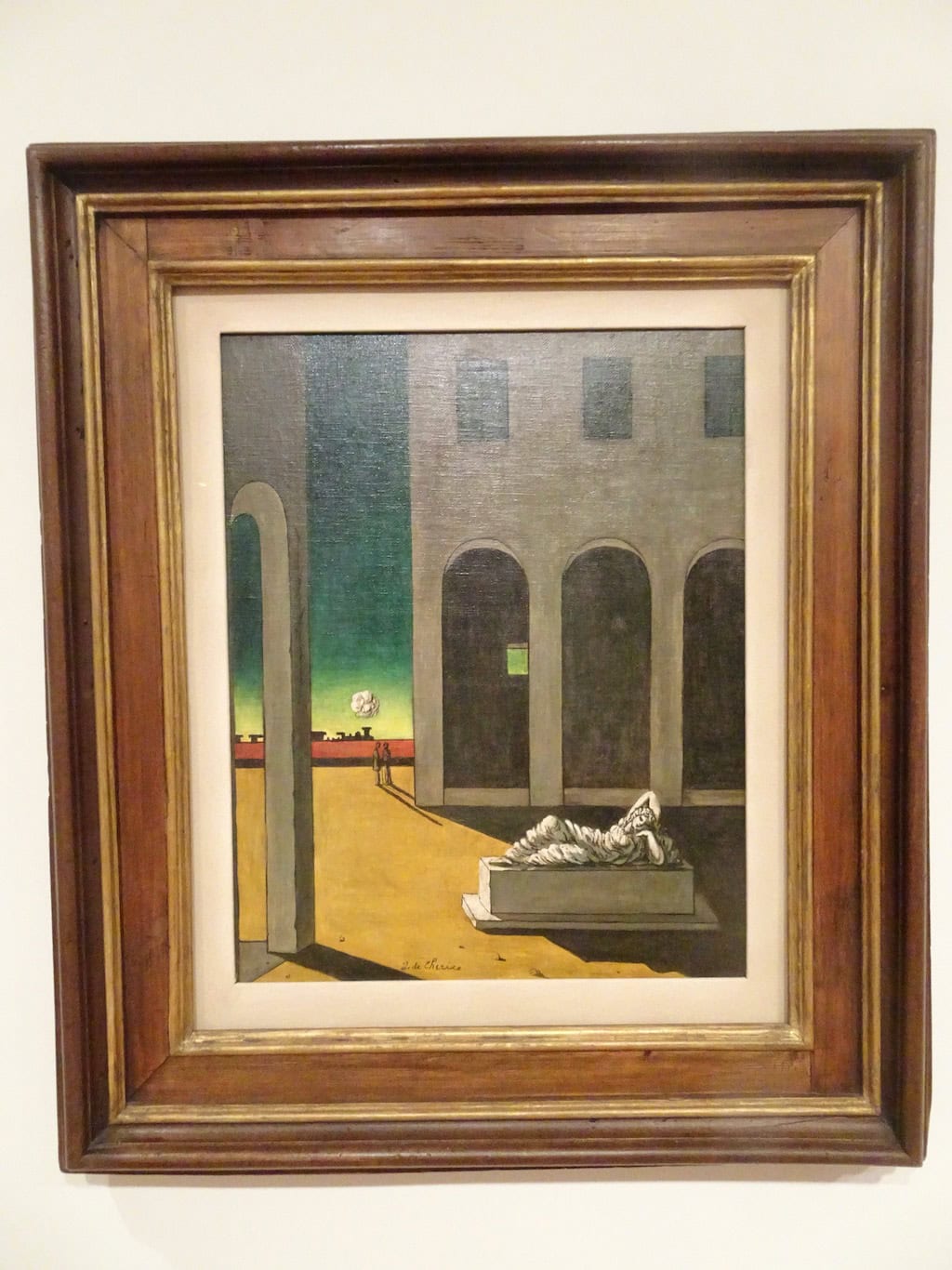
This work is listed as no. 671 in his official catalog and was exhibited in Japan in 1954. The back of the canvas bears an inscription in Italian: “This work made by my hand. G de Chirico.”
Brockman Family at Temple: NGV International Artwork
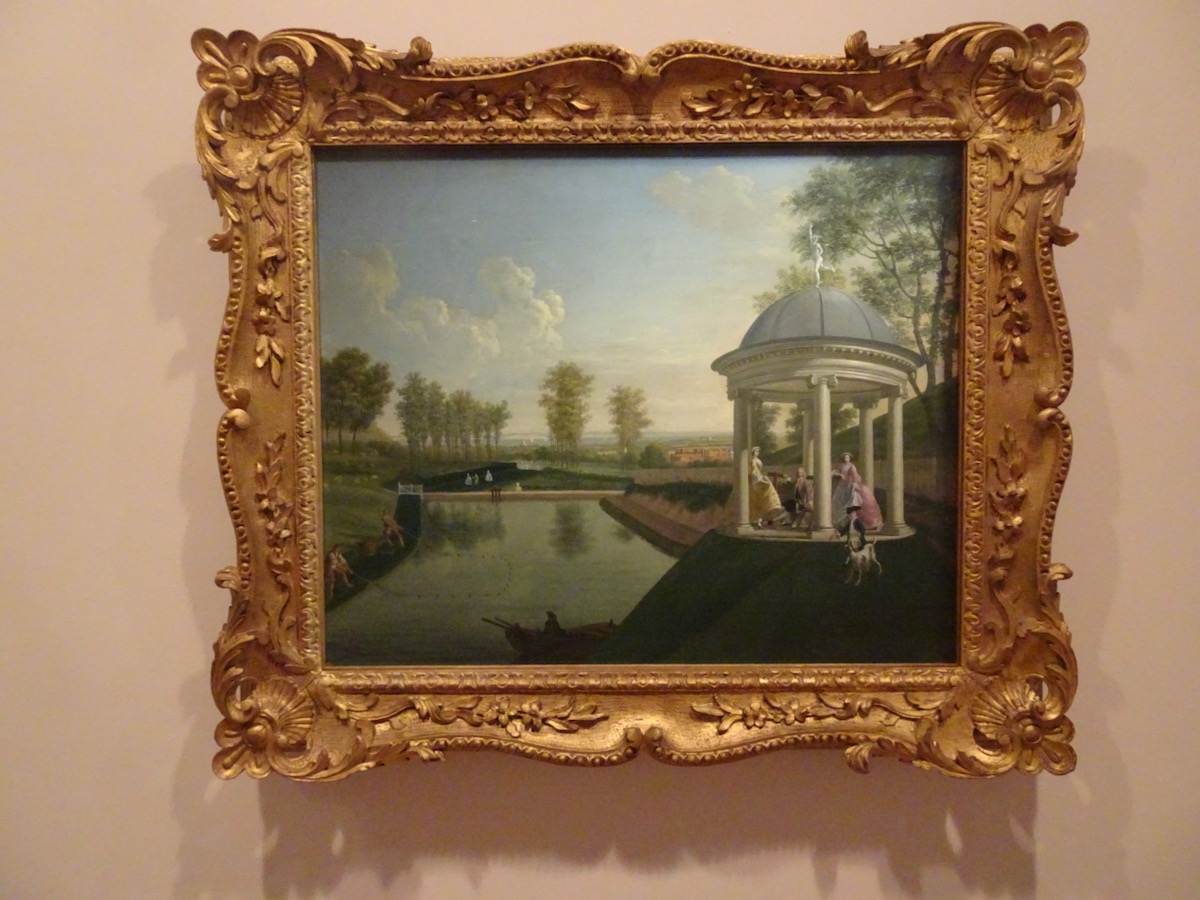
Here you can see the Brockman Family at Beachborough — Temple Pond with the Temple in the Foreground (circa 1744–1746), by Edward Haytley. A white statue of Hermes (Mercury) adorns the top of the temple, adding a classical touch to this picturesque scene.
Perseus arming: NGV Salon
“Perseus arming,” a beautiful sculpture crafted by Alfred Gilbert in 1882, vividly captures the heroic moment as Perseus readies himself to slay Medusa. The piece showcases remarkable artistry, bringing the mythological scene to life. Perseus is depicted wearing the winged helmet of Hermes and the god’s winged sandals, symbols of his divine aid and swift movement.
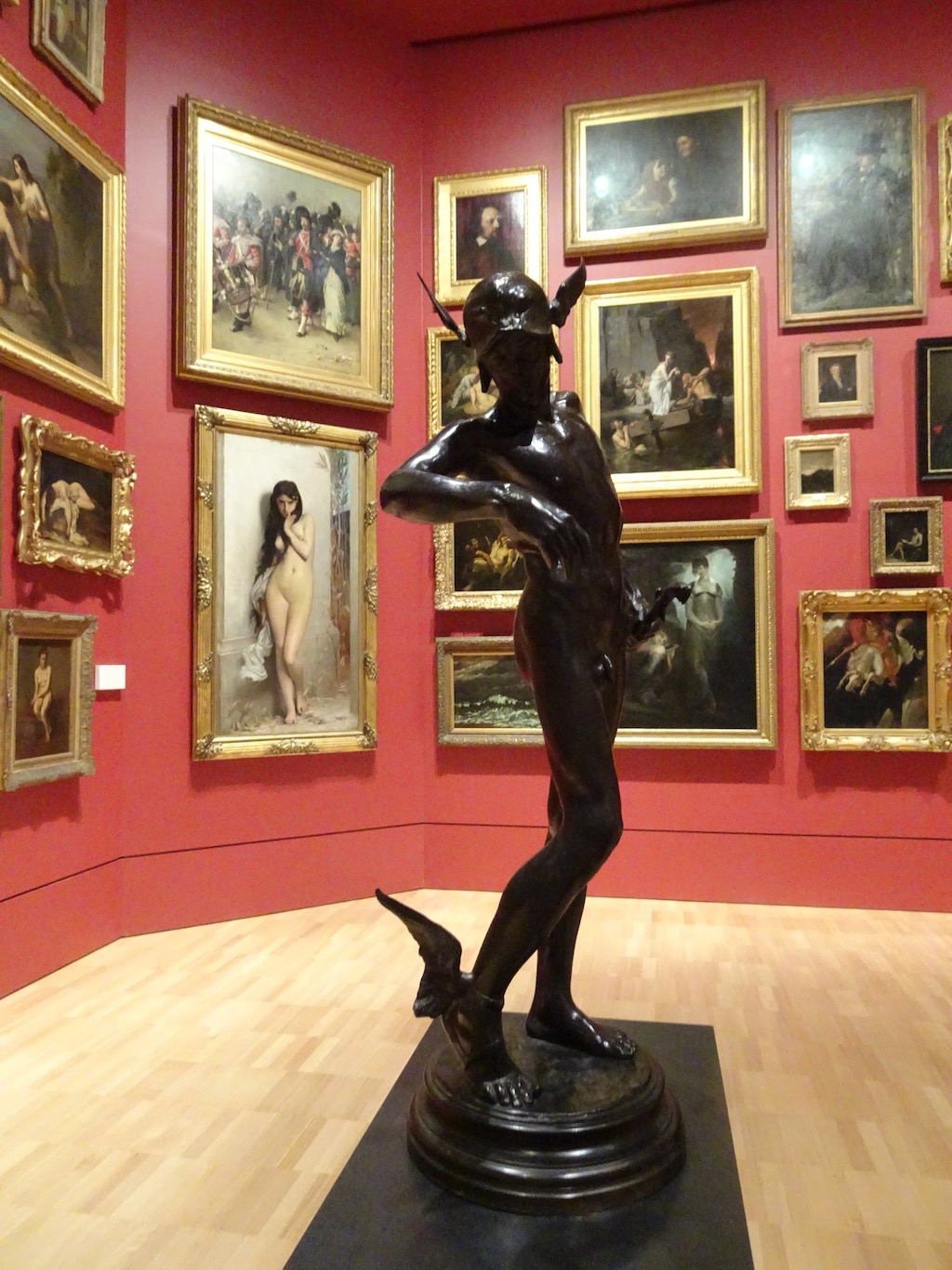
While the sculpture appears grand in this photograph, its actual dimensions are 72.4 × 34.1 × 22.2 cm, highlighting the intricate craftsmanship within a more intimate scale.
Ancient Greek Pottery: NGV International
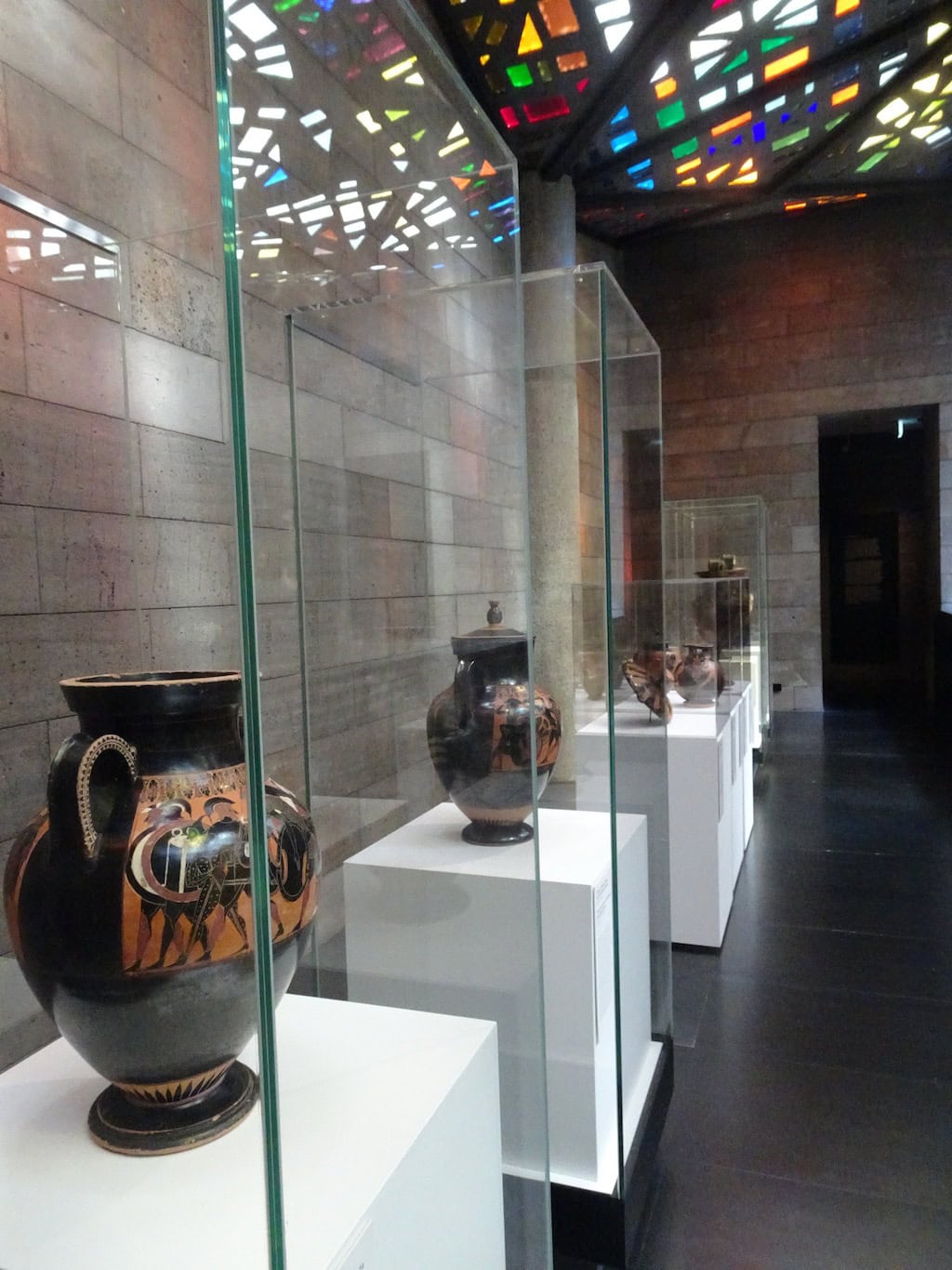
The National Gallery of Victoria (NGV) in Melbourne boasts some impressive ancient Greek ceramics, or so it seems. Curated under the esteemed guidance of Professor A.D. Trendall, this collection is renowned as one of the most exceptional of its kind in Australia.
NGV Great Hall
Observing the Great Hall at NGV was undoubtedly a highlight of my trip there. On one side were the ancient Greek vases shown in the picture above. But when you look out toward the other side, you see the Great Hall’s majestic space and refined elegance. The stained glass roof, adorned with vivid colors and intricate patterns, seemed as if kaleidoscopic light could pour into the room — though, unfortunately, that was not the case during my visit.
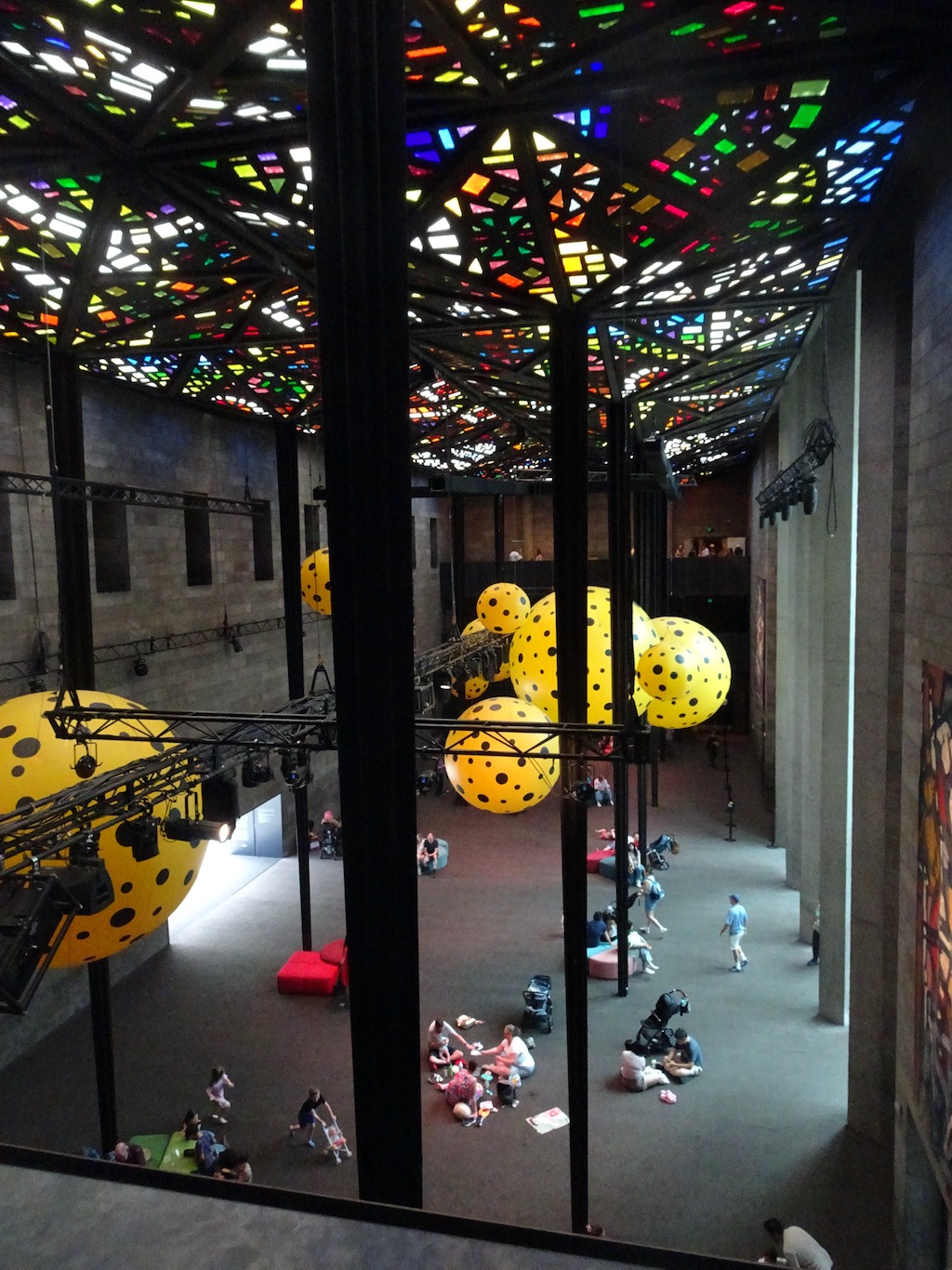
NGV’s Great Hall is a versatile and majestic space that serves as a grand entrance and vibrant gathering place. It hosts a wide range of events, including exhibitions, art launches, performances, and receptions. Additionally, it is frequently used for lectures, panel discussions, and educational activities. With its spacious and stunning design, the Great Hall provides an ideal setting for community gatherings and high-profile occasions, enriching the cultural landscape and fostering an intelligent artistic community.
Virgil vase: NGV International Artwork
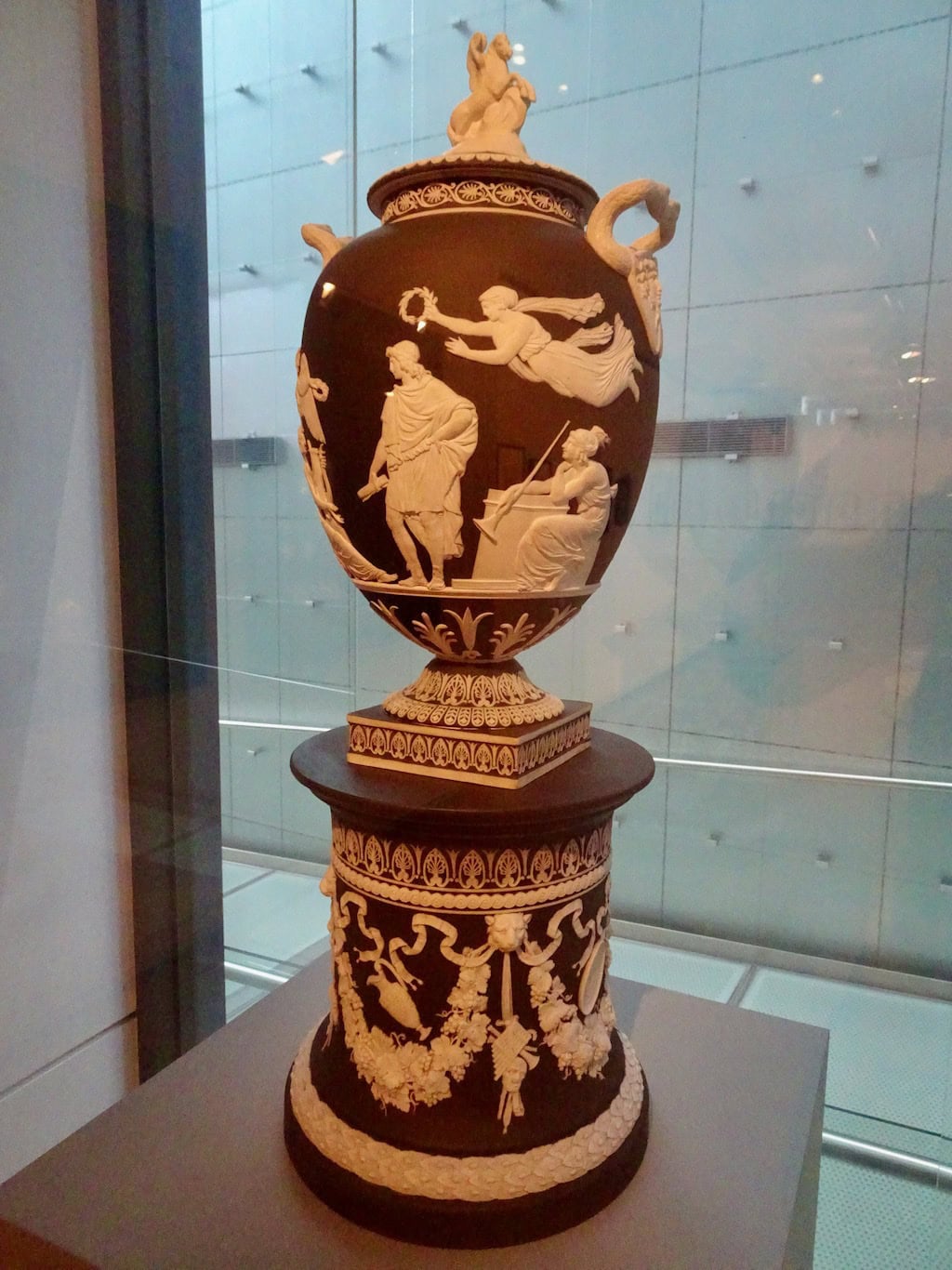
A Virgil vase by Wedgwood is a stunning piece crafted in Staffordshire, England. It features an elegant ovoid shape with snake handles emerging from Medusa masks, adding a touch of mythological intrigue. The detailed decoration depicts the young poet Virgil holding a scroll, flanked by two women, while above, two winged Victory figures present crowns, celebrating his literary greatness in a captivating scene.
Hera: NGV International Artwork
Hera Roberts was a talented painter, illustrator, and designer. She was best known for her bold, modern cover designs for The Home Journal. She was a cousin of Thea Procter and a close associate of publisher Sydney Ure Smith.
George Lambert found her an inspiring muse. In 1924, he wrote to his wife Amy, saying something like, “I’m about to paint a portrait of Hera Roberts, Thea Procter’s cousin. This special commission might help me get back on my feet.”
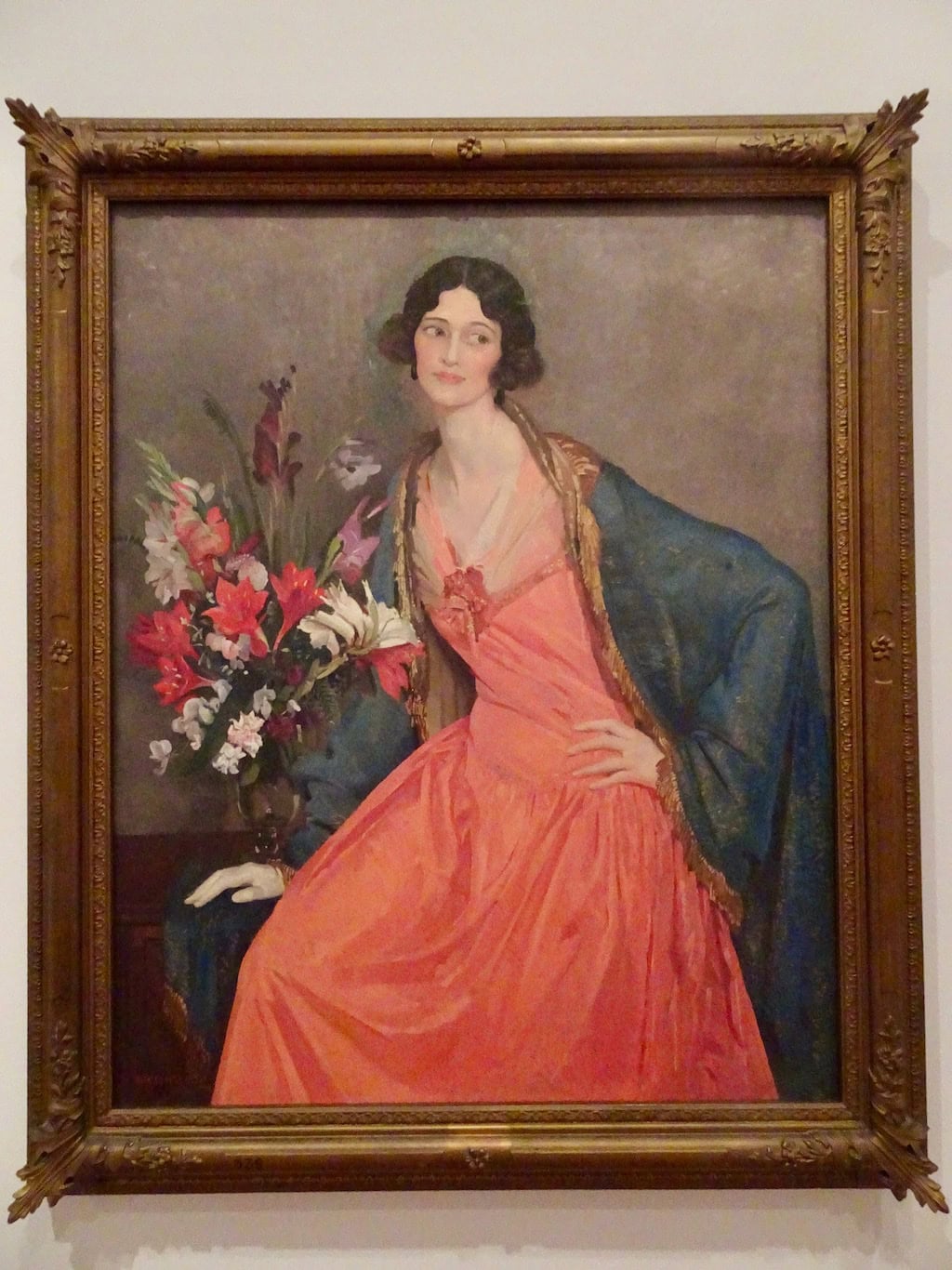
I’ve included this stunning painting of Hera because, beyond her regal beauty, she embodies a mysterious divine presence. As the wife of Zeus, Hera’s story is intricately woven into the fabric of myth and legend. Yet, I haven’t encountered anyone named Hera in my own life, which makes this image all the more intriguing. Could she be more than just a figure in art? Is she a goddess watching from the shadows, her true essence concealed beneath layers of myth and mystery?
Top NGV Art & Expert Tips for Art Enthusiasts
In conclusion, exploring Greek mythology and Hellenic themes through art offers a fascinating journey into the stories, symbols, and cultural significance of the ancient world.
Melbourne’s NGV (National Gallery of Victoria) stands out as a premier destination for this artistic adventure, with its extensive collection showcasing masterpieces that depict gods, goddesses, heroes, and mythological tales. It’s a must-visit for enthusiasts eager to delve into these timeless narratives.
To make the most of your visit, be sure to check out the NGV’s current exhibitions and consider joining their guided tours, which often feature insightful commentary from experts on mythological themes. Don’t miss the free multimedia guides available at the entrance — they’re a great way to enhance your understanding. Or, if you’re like me, just wing it and see what serendipitous discoveries you stumble upon!
Beyond the NGV, Melbourne’s Hellenic Museum offers an equally enriching experience with its dedicated collection of Greek art and statues. Here, you can explore ancient sculptures, pottery, and more, gaining deeper insight into how Greek mythology shaped cultural identity and history.
You can also check out 20 Best Melbourne Attractions: Greek Mythology & Ancient Greece for more tips. Whether you’re an art lover or a history enthusiast, Melbourne’s art galleries and museums offer a fascinating look into Greek mythology’s lasting legacy. There are also some stunning outdoor spaces with beautiful artwork inspired by Greek mythology to explore and enjoy.
Plan to spend at least 2-3 hours at NGV International and about an hour at NGV Australia. Both galleries also have great cafés where you can relax, enjoy a coffee, and take in the atmosphere.
The most striking exhibit I encountered was the towering bronze statue of Circe at NGV Australia. Her commanding presence seemed almost real within the expansive gallery space, enhanced by the enigmatic green painting of the Sirens lurking behind her, adding an extra layer of mystery to the scene.
Interestingly, Circe also appears at the Art Gallery of New South Wales in Sydney, cementing her status as a recurring and iconic figure across Australia’s cultural landscape.
Pin it … Share it