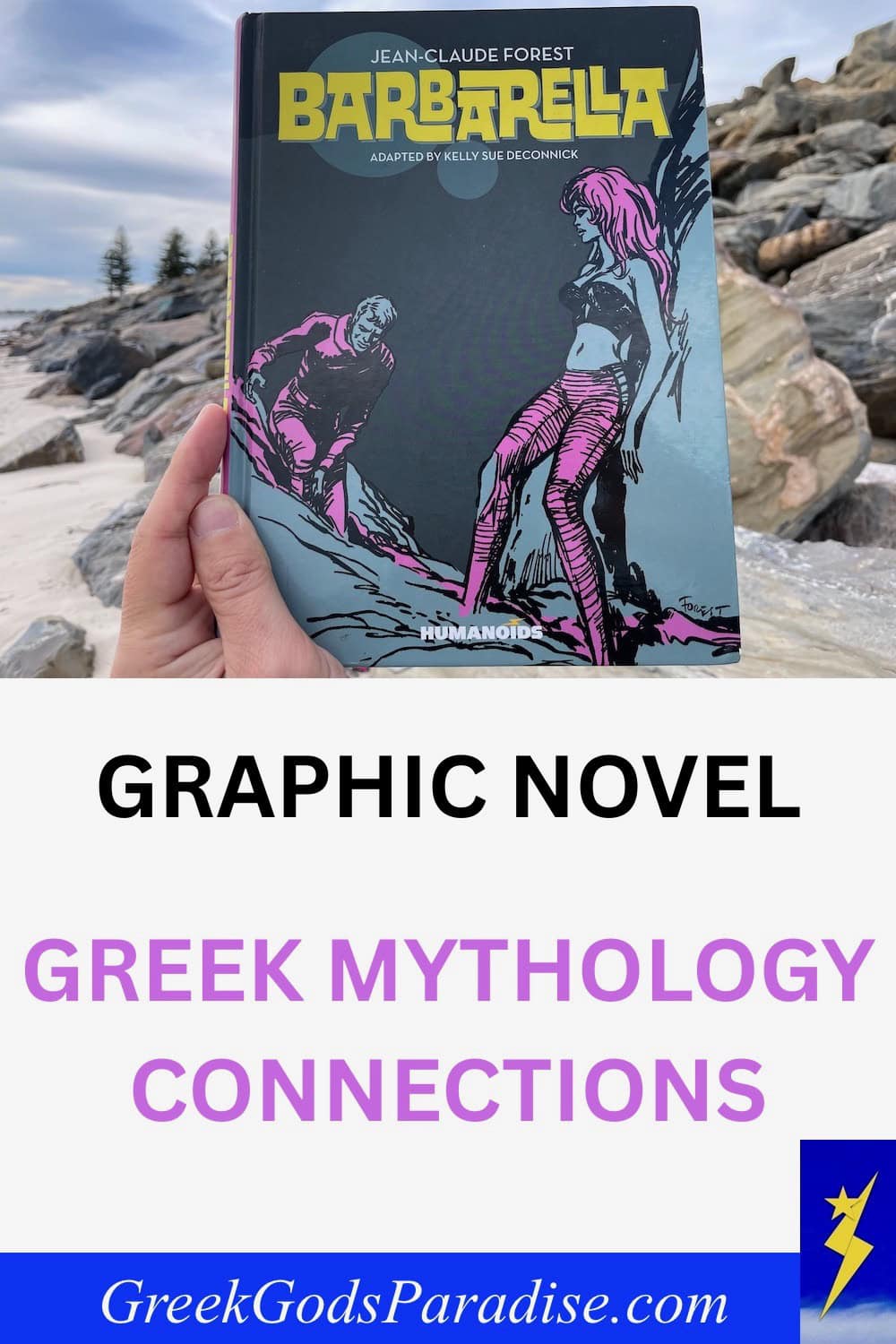


So, I’ve been diving into the wild world of Barbarella — you know, that 1968 sci-fi/comedy flick that’s a total trip. I’ve always had this hunch that there’s some secret Greek mythology vibes hiding in Barbarella, but I could never quite crack the code just from watching the movie. So, I figured, why not go full nerd and check out the Barbarella graphic novel by Jean-Claude Forest?
I found a Barbarella comic book translated by Kelly Sue Deconnick and thought, “Hey, this must be the first English version of the French comic, right?” Turns out, nope! That’s actually a more recent translation. Just so you know, the comic images below are from a much older version — the Grove Press edition. The feature image shows the Barbarella graphic novel translated by Kelly Sue Deconnick. And by Zeus, both of these Barbarella graphic novels opened my eyes to just how deep the mythology rabbit hole goes. It turns out the Barbarella comic is packed with more Greek myth references than I ever imagined.
Jean-Claude Forest’s Barbarella comic totally sucked me into its vortex. That’s why I wanted to find the earliest translation I could get my hands on. I went with the Grove Press edition, which features these subtly colored illustrations that give it a fresh, vibrant vibe. Meanwhile, Deconnick’s version is all in striking black and white — timeless and sleek. I figured, why not explore both to make sure I wasn’t missing any of the Greek mythology hidden within this sexy space adventure.
Barbarella Graphic Novel Review: Top Greek Mythology References
Here’s the crazy part — Medusa actually shows up in the Barbarella comic story! I definitely wasn’t expecting to see her in the storyline, but there she was.
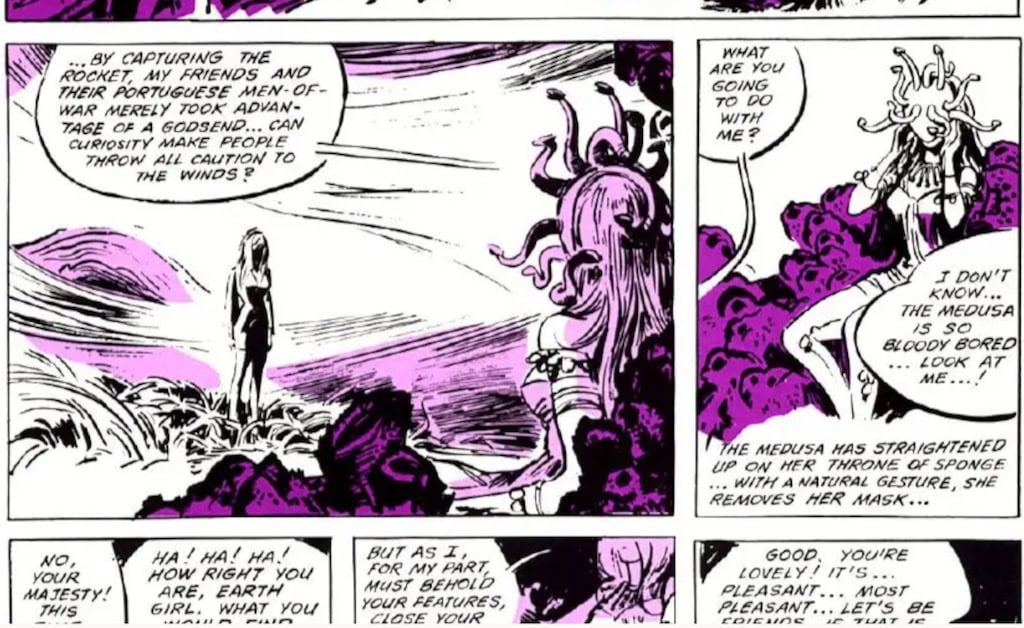
Who would have thought, after seeing the film, that Medusa would appear in the Barbarella sci-fi comic, hiding out in the cosmic chaos? It’s like this weird, awesome mashup of space adventure and ancient legends, and honestly, it’s way more layered than I ever gave it credit for.
So, here’s the thing — what made me wonder if there’s some Greek mythology lurking in Barbarella? It’s that incredible labyrinth scene in the movie. You know, the one that’s straight out of Greek legend, where Theseus defeats the Minotaur? Turns out, the comic version of Barbarella actually features that same epic labyrinth. It’s a clear nod to Greek mythology hidden right in the midst of all the sci-fi craziness.
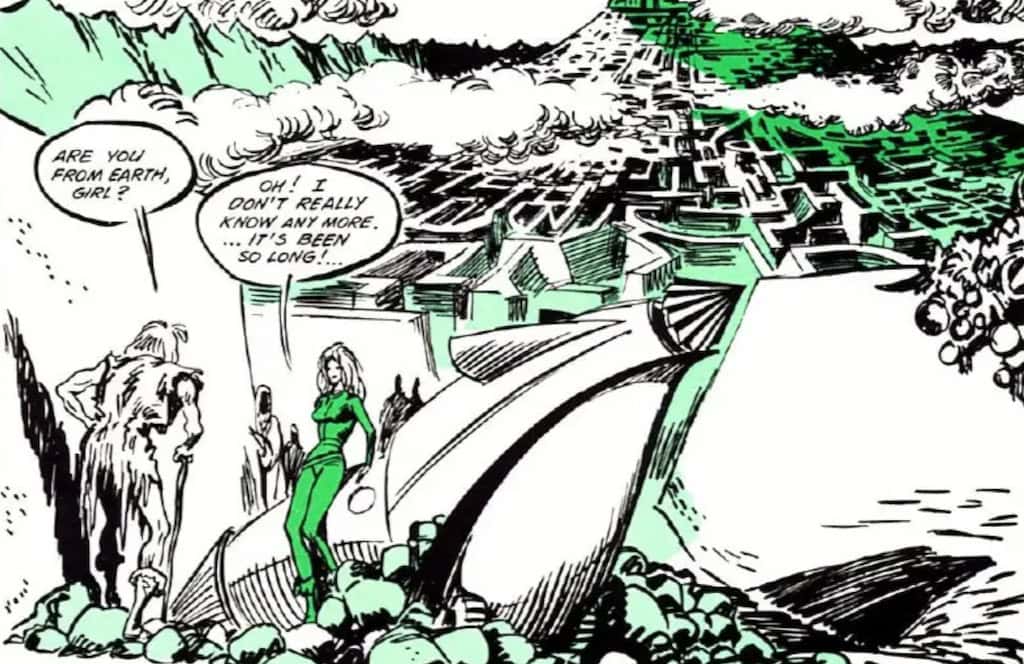
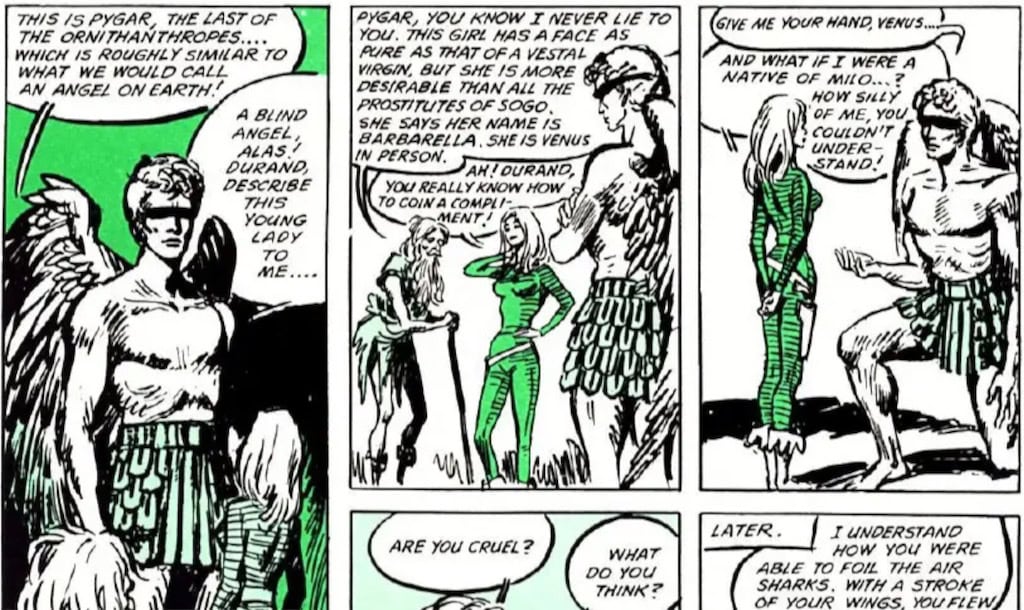
The Barbarella comic throws in some seriously intriguing Greek and Roman mythological connections. At one point, it refers to Barbarella as a Vestal Virgin — one of those sacred priestesses of ancient Rome dedicated to Vesta, the goddess of hearth, home, and family. Vesta is the Greek equivalent, Hestia.
But here’s the big one: it refers to Barbarella as Venus herself. That’s no small detail — it’s a direct nod to Aphrodite, the goddess of love and beauty, elevating her to divine status. It’s like the comic is weaving a tapestry of myth right into her space-faring adventure, adding goddess symbolism that goes far beyond just a sexy sci-fi story.
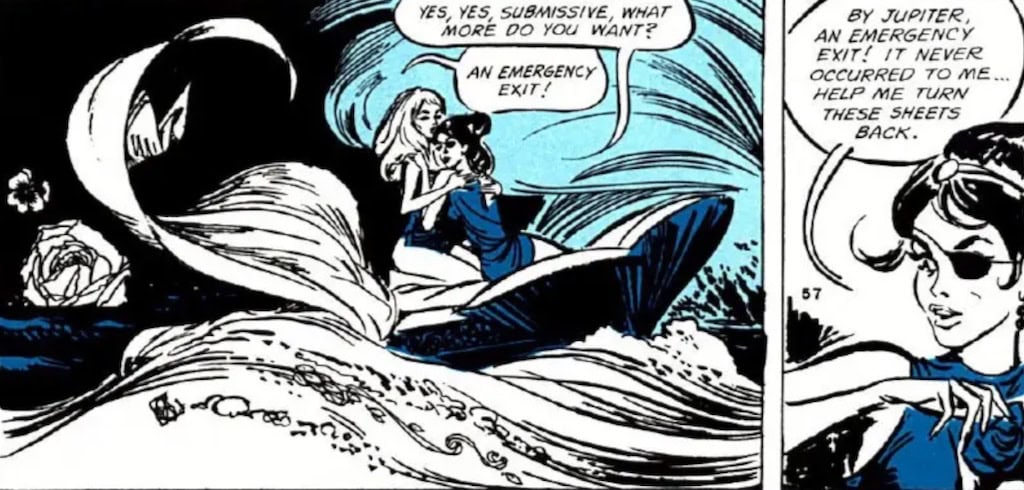
There’s even a “By Jupiter” comment in the Barbarella comic — basically the space version of saying “By Zeus!” It’s like the comic’s throwing in some classic Greek shout-outs to emphasize its connection to Greek mythology.
So, I almost missed this cool Greek reference early on in the Barbarella graphic novel. And here’s another scene that doesn’t make it into the movie, but plays a big part in the comic story. There’s this guy named Dianthus, and his name actually has a hidden meaning. It comes from the Greek words “dios” and “anthos” (meaning flower).
In Ancient Greek, the term δῖος (dîos) conveys meanings such as “divine,” “godlike,” “noble,” or “brilliant/shining.” It was frequently used as an epithet for heroes and deities, including Zeus, whose genitive form is Dios, meaning “of Zeus.” The word originates from the same Indo-European root as Zeus and the Latin deus, which means “God.” This root relates to celestial or luminous beings, and as a result, δῖος can also be interpreted as “heavenly” or “of the sky.”
Dianthus has been around for ages — it’s one of the oldest cut flowers, prized for how easy it is to grow, how long it lasts, its lovely fragrance, and even some practical uses.

Alright, here’s the deal: I’m not gonna lie, the Barbarella (1968) movie totally outshines the comic. It’s just way more fun and hits all the right spots. The comic’s got its flaws, no doubt, but I gotta say, I loved how it sprinkled in Greek mythology here and there — it added a cool layer of depth. The artwork wasn’t anything special, but it did something pretty powerful: it inspired the Barbarella movie to be made in the first place. For that alone, I think we should all be grateful.
That said, I really wish Medusa had made an appearance in the film. I mean, pulling off Medusa scenes on screen would’ve been a huge challenge, but you’ll have to check out the Barbarella graphic novel to see what I mean. Honestly, I’m glad I read it, but I’d only give it a 7 out of 10 at best. I was expecting more sexy stuff, but it was pretty tame — oh well. The movie totally makes up for it in that department.
Check Price & Availability: BARBARELLA (Jean-Claude Forest)
For more Greek mythology comics and graphic novels, be sure to check out these…
Pin it … Share it