

Alright, picture this: after snorkelling at the Star of Greece shipwreck at Port Willunga Beach, a lightbulb went off. I thought, “Hey, why not visit the Willunga Museum and see some cool stuff, possibly salvaged from the Star of Greece wreck in 1888?”
Honestly, I didn’t really know what to expect, but let me tell you, I was seriously blown away. And get this… talk about a curveball. I was introduced to an artwork that depicted Ino and Bacchus — you know, Dionysus, the Greek god of a good party. Like, wow, I never saw that coming!
I’ve seen the Star of Greece figurehead at the Port Adelaide Maritime Museum. It looks like the Hera figurehead on the Argo ship in the 1963 movie Jason and the Argonauts. But the Willunga Museum? By Jupiter, they’ve got some seriously cool treasures there too. So, if you’re keen to dive deeper, this informative guide is going to hook you up with seven of the best things to check out at the museum.
I’m referring to items like a sleek model of the Star of Greece ship and a vintage-style telescope reminiscent of those seen in old pirate movies. The Star of Greece exhibition at the Willunga Museum is a goldmine for anyone interested in Australian maritime history. And hey, if you’ve already soaked up all the info in my Star of Greece: Port Willunga Beach Guide, learning about the Willunga Museum is the perfect next step. Trust me on this one.
Star of Greece Wreck: 7 Best Willunga Museum Attractions
Alright, here’s what you need to know history buffs (and even if you’re not, this is still pretty interesting!). You might hear talk of the “Willunga Museum” and picture one place, but nope, there are actually two awesome spots to check out! We’re talking about the Willunga Courthouse and Police Station Museum, in addition to the Willunga Slate Museum.
Both of these historical gems are located on the main drag at 61 High Street, in the charming South Australian town of Willunga. Now, you can’t just rock up any old time, so mark your calendars! They open their doors on the first Saturday and third Sunday of each month, from 1 pm to 4 pm. Just a heads-up though, they take a little winter break, so you can’t visit inside in June, July, or August.
The Willunga Courthouse Museum has all sorts of interesting stuff, including the exhibits dedicated to the famous Star of Greece shipwreck. But in reality, there’s way more to explore than just that!
Just a stone’s throw from the old courthouse, you’ll find the Willunga Slate Museum in its own separate building. And guess what? That’s where you’ll see Dionysus! (Intriguing, right?)
For fans of maritime history interested in the Star of Greece, the Willunga Museum holds a wealth of fascinating artifacts. Here are 7 of the best things to see that shed light on that legendary wreck which occurred off the coast of Port Willunga in 1888!
1. Willunga Museum and the Beautiful Grounds
Okay, so I went to the Willunga Museum, and it’s in this lovely, quiet spot higher up on High Street. Right as I got there, this dog was crossing the footbridge, almost like it was put there just for me — a little welcome committee! You can actually see the dog in the photo, about to cross the footbridge over the shallow valley below.
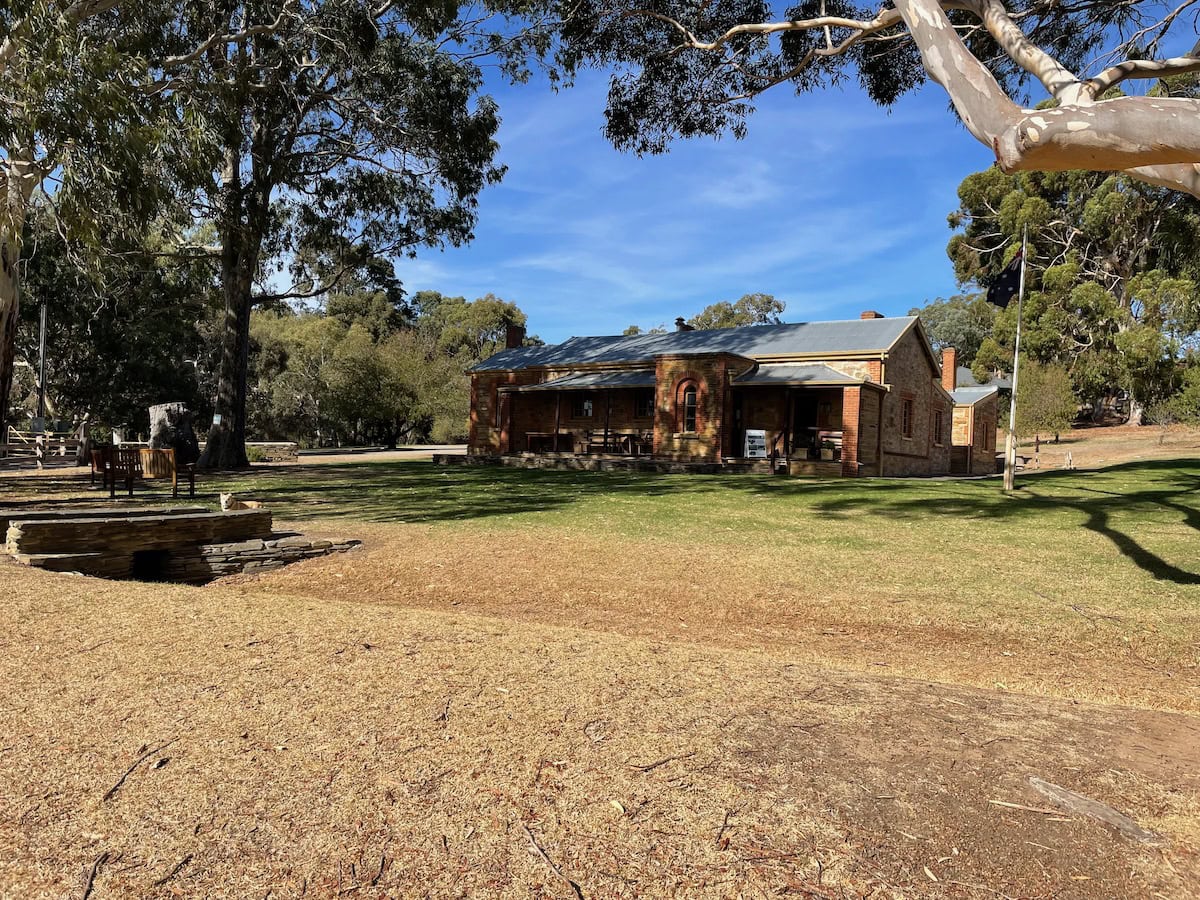
This place has that perfect country feel, even though it’s not far from Adelaide, maybe 45 minutes or so.
Things are going well so far! I was really keen to see what was inside. As I walked through the entrance of the Willunga Courthouse Museum, I had a quick look around and pretty quickly noticed an info board on the wall related to the Star of Greece wreck.
I pulled out my phone to snap a pic, but then a lady came out and introduced herself. I did the same and mentioned I was there to check out the Star of Greece exhibits. There was another old chap near the door too. I did manage to grab a photo of a display about a Heroic Mounted Constable first who was involved with the Star of Greece tragedy. Then the lady says, “This guy is serious!”
She asked the gentleman if he could take me to see the Star of Greece exhibition, and he was happy to. From there, I ended up getting my own personal tour of the Willunga museum, which had some awesome Star of Greece exhibits, and even led me to the Greek god, Bacchus!
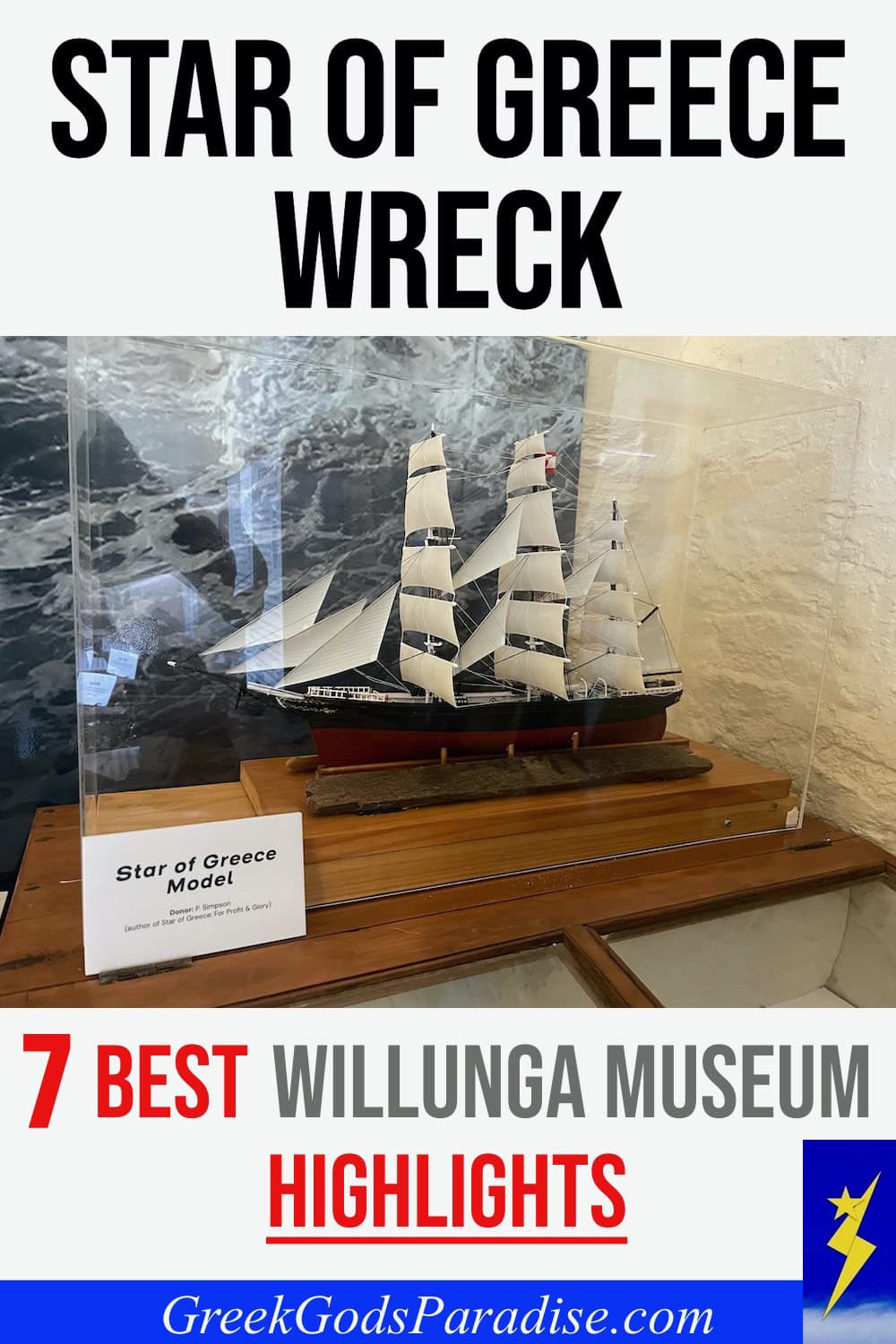
2. Star of Greece Model: Willunga Museum
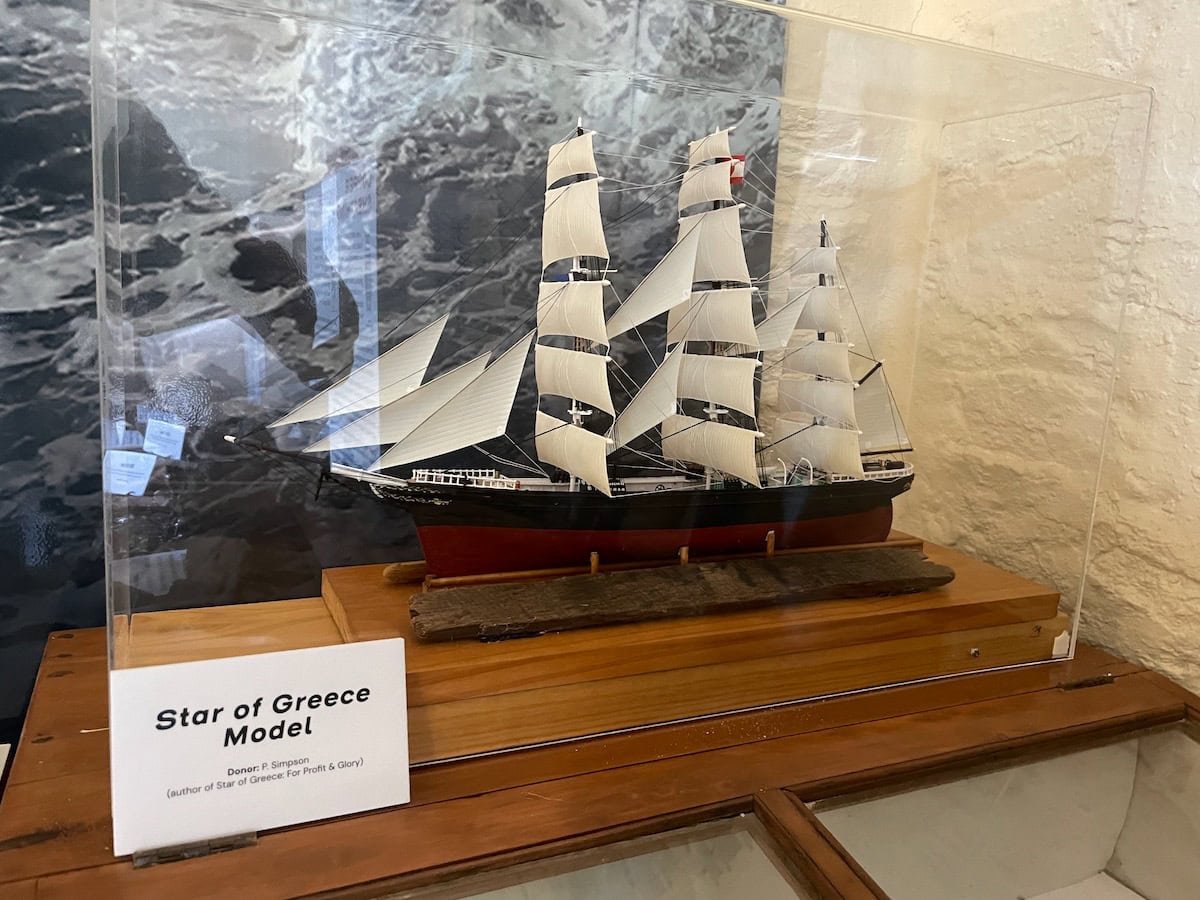
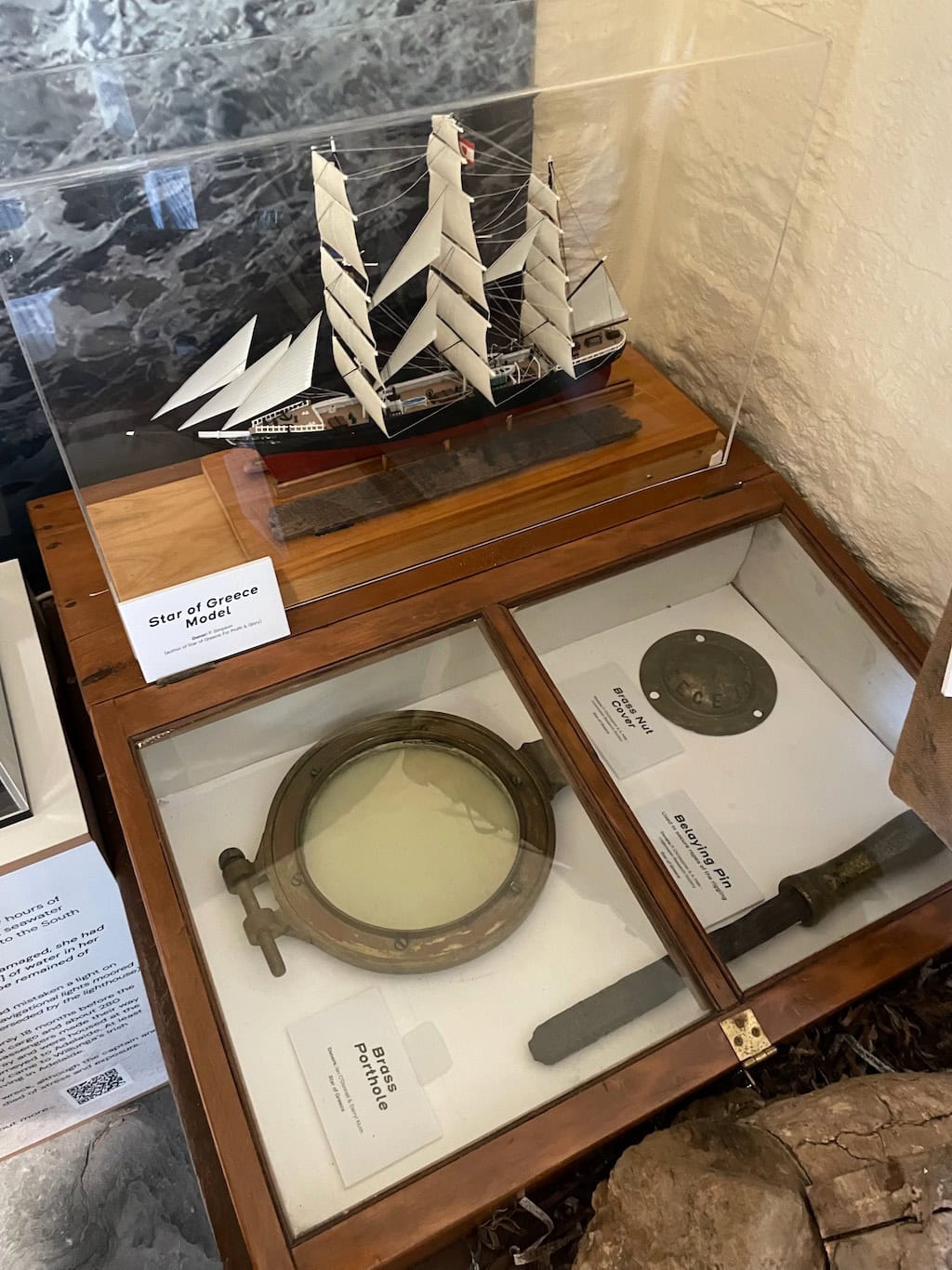
So, you’re probably curious about what the Star of Greece ship looked like, the one that wrecked on Port Willunga Beach, right? Well, the Willunga museum totally has you covered! They’ve got a cool Star of Greece model ship on display for anyone who’s interested.
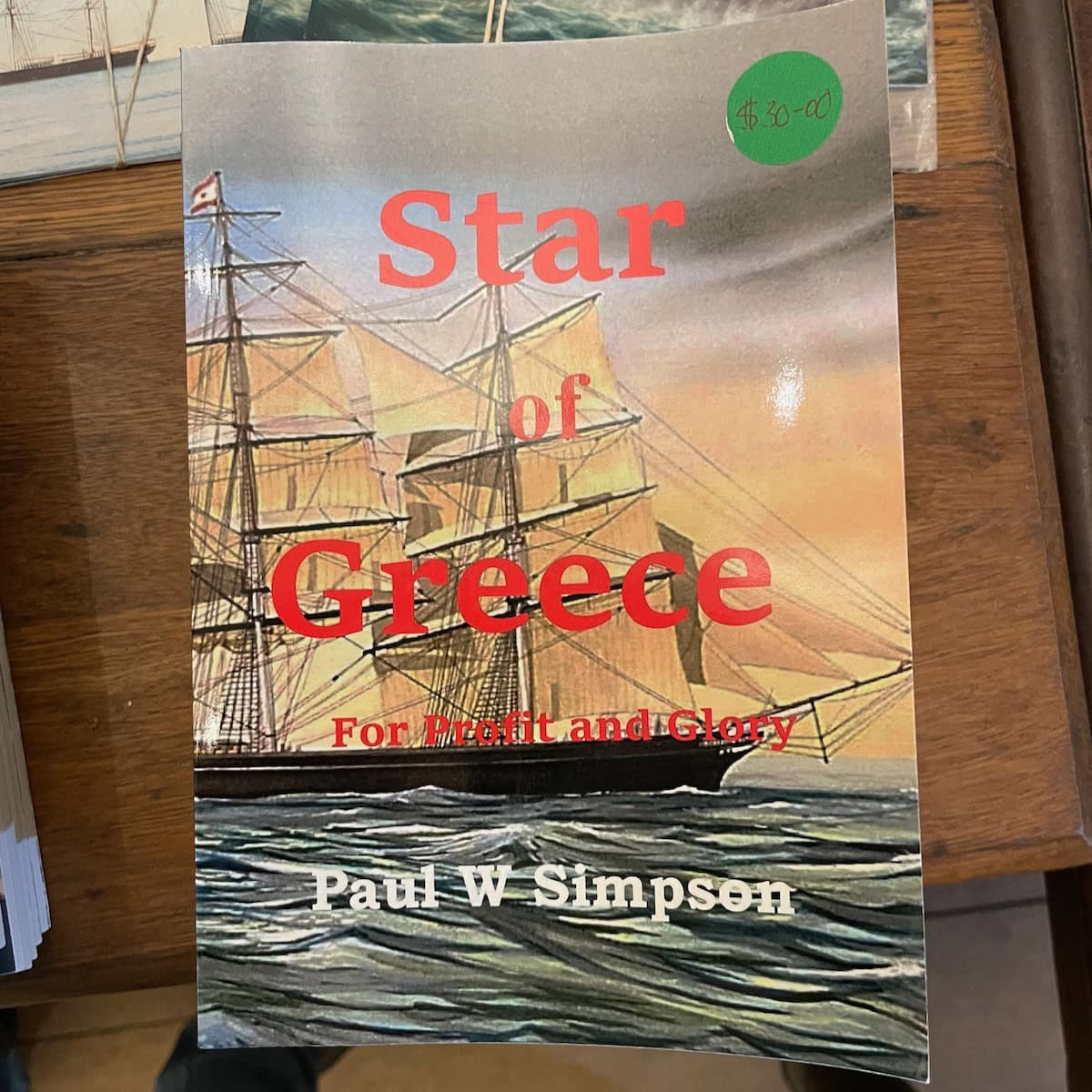
Turns out, this Star of Greece model was actually a gift from P. Simpson, the guy who wrote the book, “Star of Greece: For Profit and Glory.” The book was even available for purchase at the museum — I’ll show you a picture of it later in this Willunga museum guide!
Anyway, looking at the Star of Greece model, you can see it was a three-masted ship. It was a pretty substantial vessel, weighing in at 1227 tons, and built way back in 1868 by Harland & Wolff over in Belfast, Ireland. This full-rigged iron ship was a really sleek and elegant thing, spending a good 20 years sailing all over the world, hauling different kinds of cargo.
The really famous shipwreck piece salvaged was definitely its figurehead – a gorgeous Grecian woman. She was painted white with some fancy gold on her tunic, a bracelet, and even a beautiful gold leaf crown in her hair. It was a fantastic carving that really matched the elegant vibe of the ship itself. I like to think of her as Hera, as shown in my Jason and the Argonauts Movie Myth Tribute.
The Star of Greece’s final trip to South Australia started on March 17, 1888, from Great Britain. It was carrying a huge 22-ton gun for a planned fort at Glenelg. The ship made it to Port Adelaide on June 11th and then loaded up with a massive 16,000 bags of wheat to take back to the UK.
Then, at 6 pm on Friday, July 12th, the ship set sail for what should have been a four-month trip back to Europe. Sadly, the 28 crew members on board had no idea this would be their very last journey.
In the display case alongside the Star of Greece model ship rested several intriguing nautical items: a brass porthole, a brass nut cover, and a belaying pin, a crucial piece of equipment used on ships to fasten lines of the running rigging.
3. Seahorse Binnacle: Compass Support
So, you wanna see the really famous stuff from the Star of Greece shipwreck? Head to the Port Adelaide Maritime Museum — that’s where the iconic figurehead is, and honestly, it’s the star attraction, the best piece they saved from that wreck.
But hey, you’re at the Willunga museum right now! So what else is cool to check out? You gotta see this Seahorse binnacle. It’s one of three that held the ship’s compass in place.
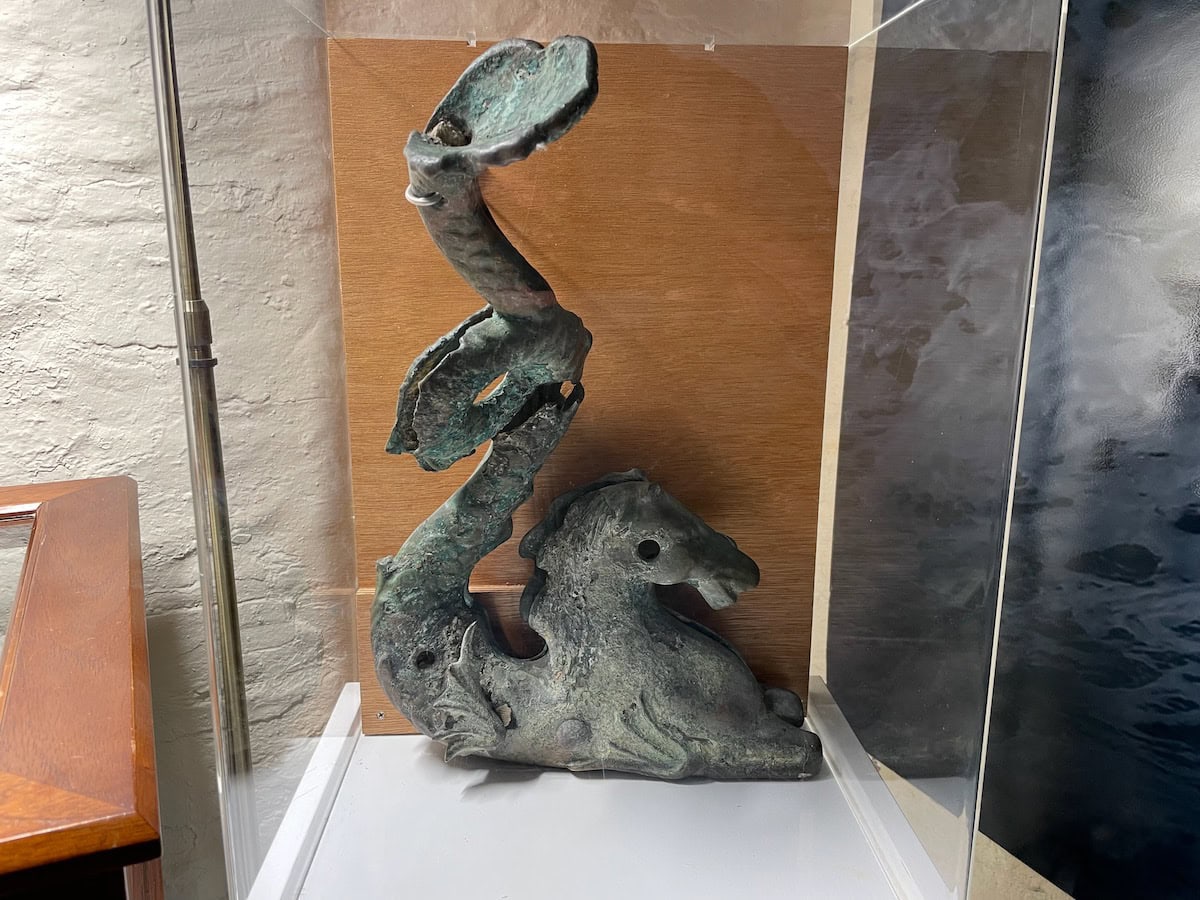
Now, looking at stuff like that, you just know this wasn’t your average ship. It had to be something special, maybe even a little mythical. And honestly, with an impressive ship like that, I’m pretty sure Poseidon, the god of the sea himself, was keeping an eye on its journey.
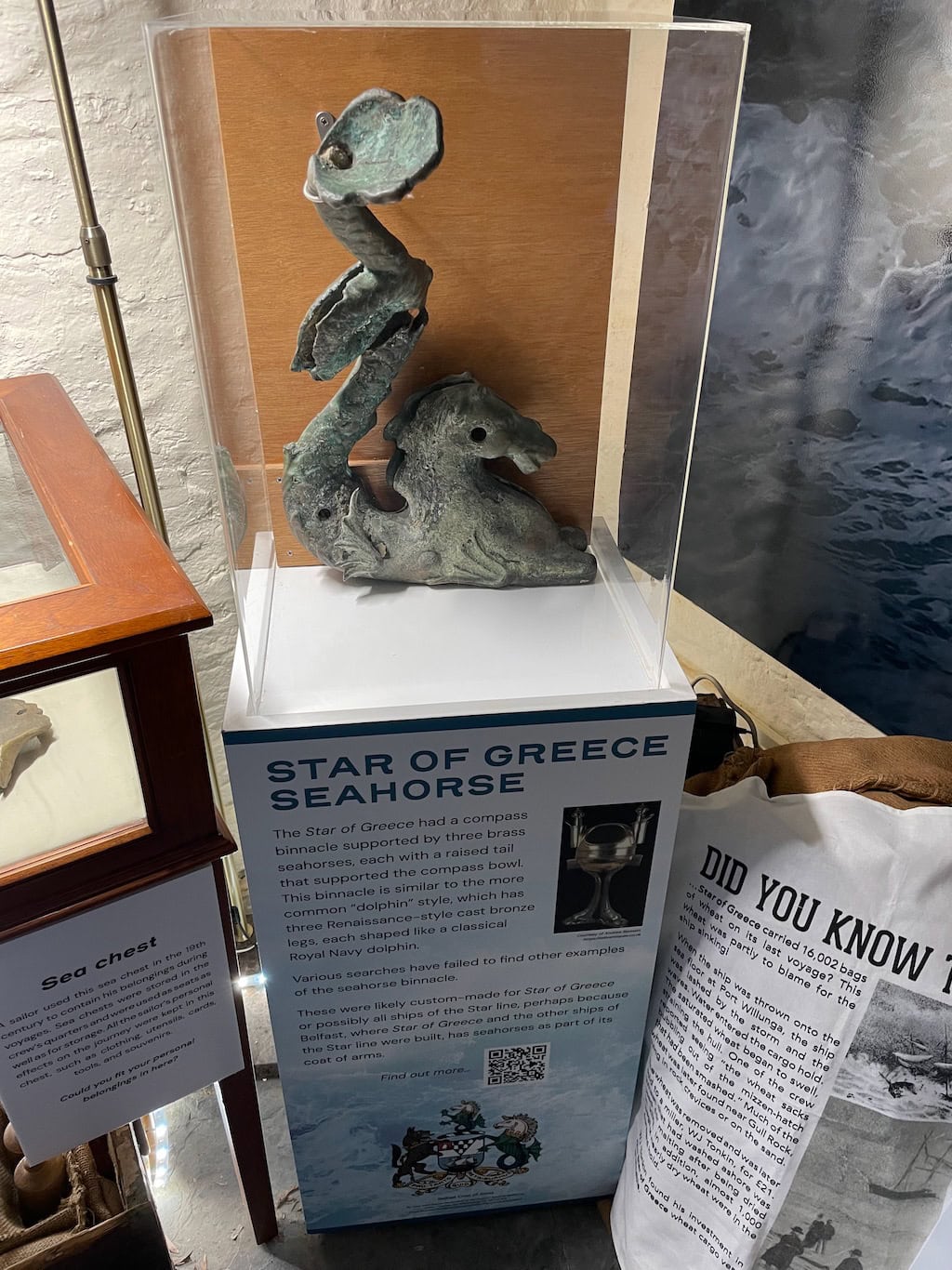
I mean, I can’t tell you why he decided to wreck the Star of Greece right there at Port Willunga, but it sure feels like he had a hand in it, doesn’t it?
4. Wreck of the Star of Greece: Painting by George F. Gregory
Practically all of the Star of Greece exhibits at the Willunga museum are found inside a cell — yeah, it was once a jail cell! Remember this was once a Courthouse and Police Station.
Inside the cell, a compelling watercolor by the renowned Australian marine artist George F. Gregory captures the dramatic final moments of the Star of Greece. Most likely painted in 1888, shortly after the tragic shipwreck, it depicts the vessel foundering off Port Willunga Beach. Rescuers are shown on the shore, desperately attempting to aid those still aboard as the ship succumbs to the waves.
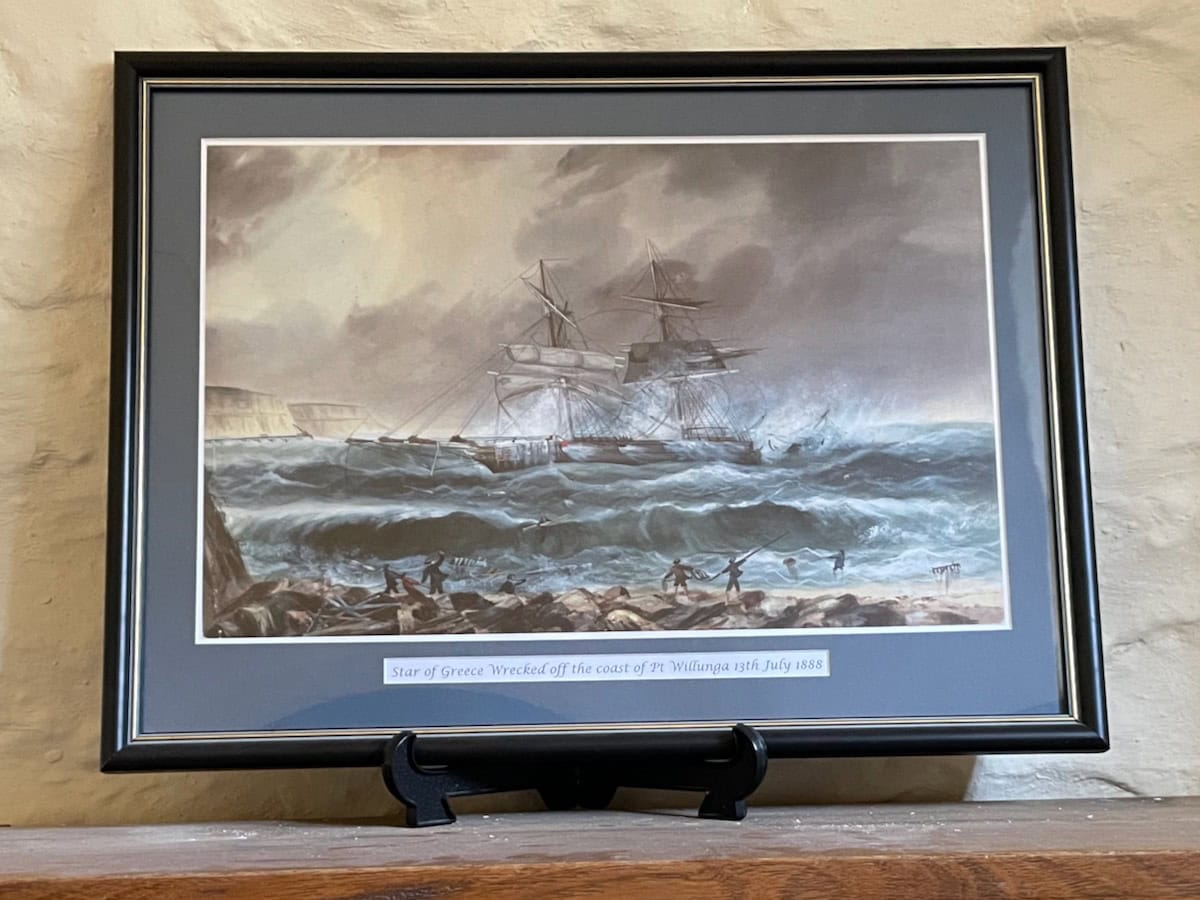
The Star of Greece wreck was a huge deal back then, really shaking up the colony. Artists and writers captured the event, and Gregory’s painting is one of those records. He probably put it together from what people saw, what he saw after the wreck, and a bit of his own artistic flair.
Maritime disasters were popular subjects for paintings, and George F. Gregory made lots of these as souvenirs. They’re still his most famous works. I’m guessing this one is a print of an original painting, possibly given to the Port Adelaide Nautical Museum.
The Star of Greece wreck on July 13, 1888, was an enormous tragedy. It wasn’t just about lost lives and cargo. That’s because it showed how unprepared they were for maritime emergencies. There wasn’t even a proper way to get a line to the ship at Port Willunga, and by the time they got the equipment from Port Adelaide, 17 crew members were gone. The ship was loaded with wheat heading to the UK.
This painting is a key piece connected to one of South Australia’s most infamous shipwrecks. It even pushed for big changes in maritime safety. Since there were no photos, this watercolour painting really brings the drama and desperation of that disastrous day to life.
5. Star of Greece: Heroic Constable Tuohy and Telescope Display
When you see a large picture of a guy wearing medals in the Star of Greece museum cell, you immediately figure he was the main hero during the shipwreck. And you’re probably right!
You’ll learn about the bravery of Mounted Constable Tuohy, who was stationed here. On August 4th, 1888, at the monthly police inspection, Tuohy and the other assisting officers were praised by the Police Commissioner. Tuohy was specifically highlighted for his actions. Commissioner Peterswald even said “Mounted Constable Tuohy was pre-eminent amongst them for the outstanding bravery he showed in saving life at the risk of his own…”
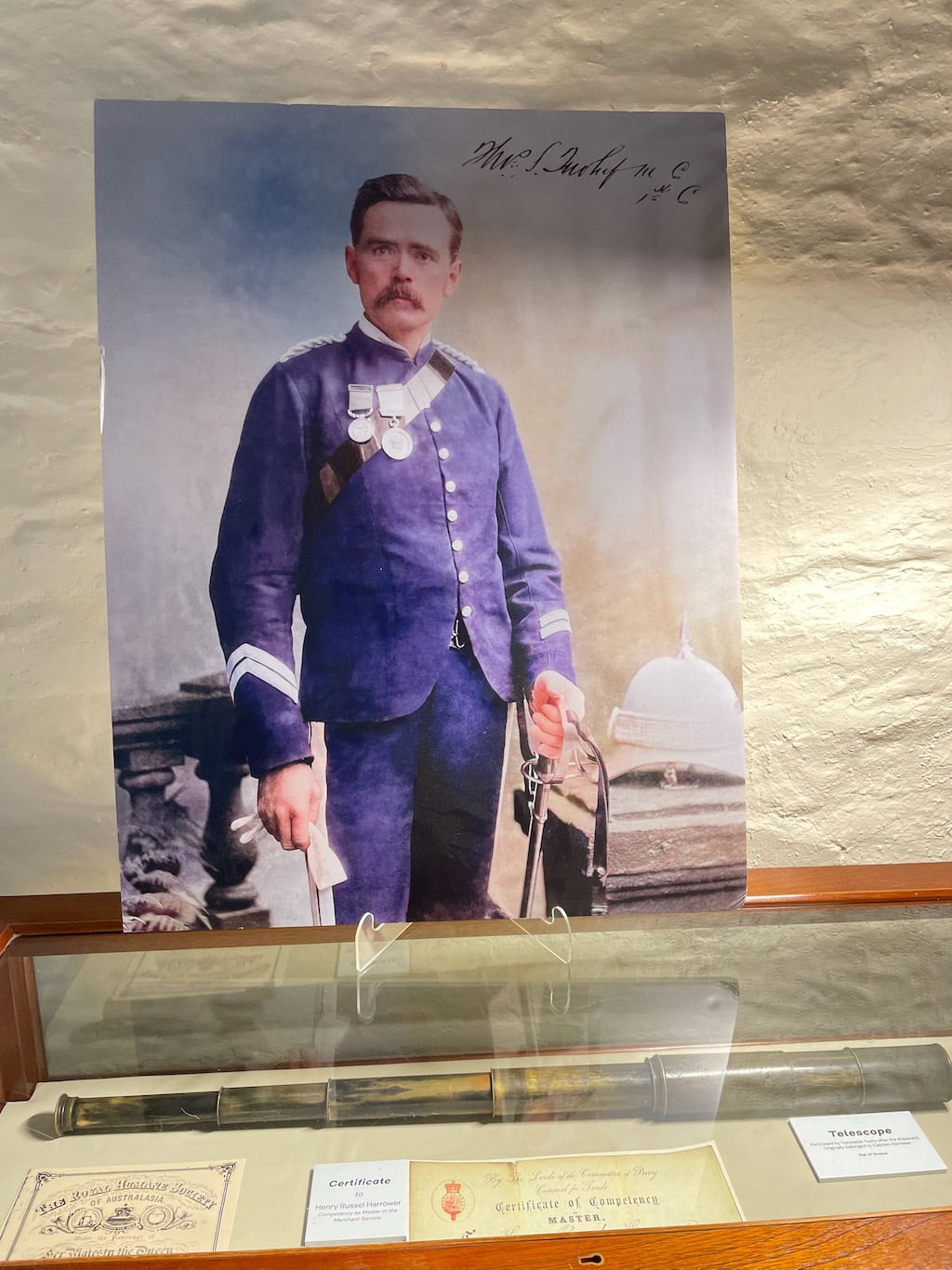
So, the other police got cash as a reward, but Tuohy? He could’ve snagged 20 pounds. Instead, he went for a medal, something he wanted his family to have as an heirloom. The Police Commissioner even put him up for an award from the Royal Humane Society, and they were cool with giving him a Silver Medal.
6. Star of Greece: Willunga Museum Information Displays
Inside the Willunga museum, it’s more than just a dusty old building. Right off the bat, you’ll spot a cool wall display about the mounted constable who was a total hero — talk about a dramatic entrance!
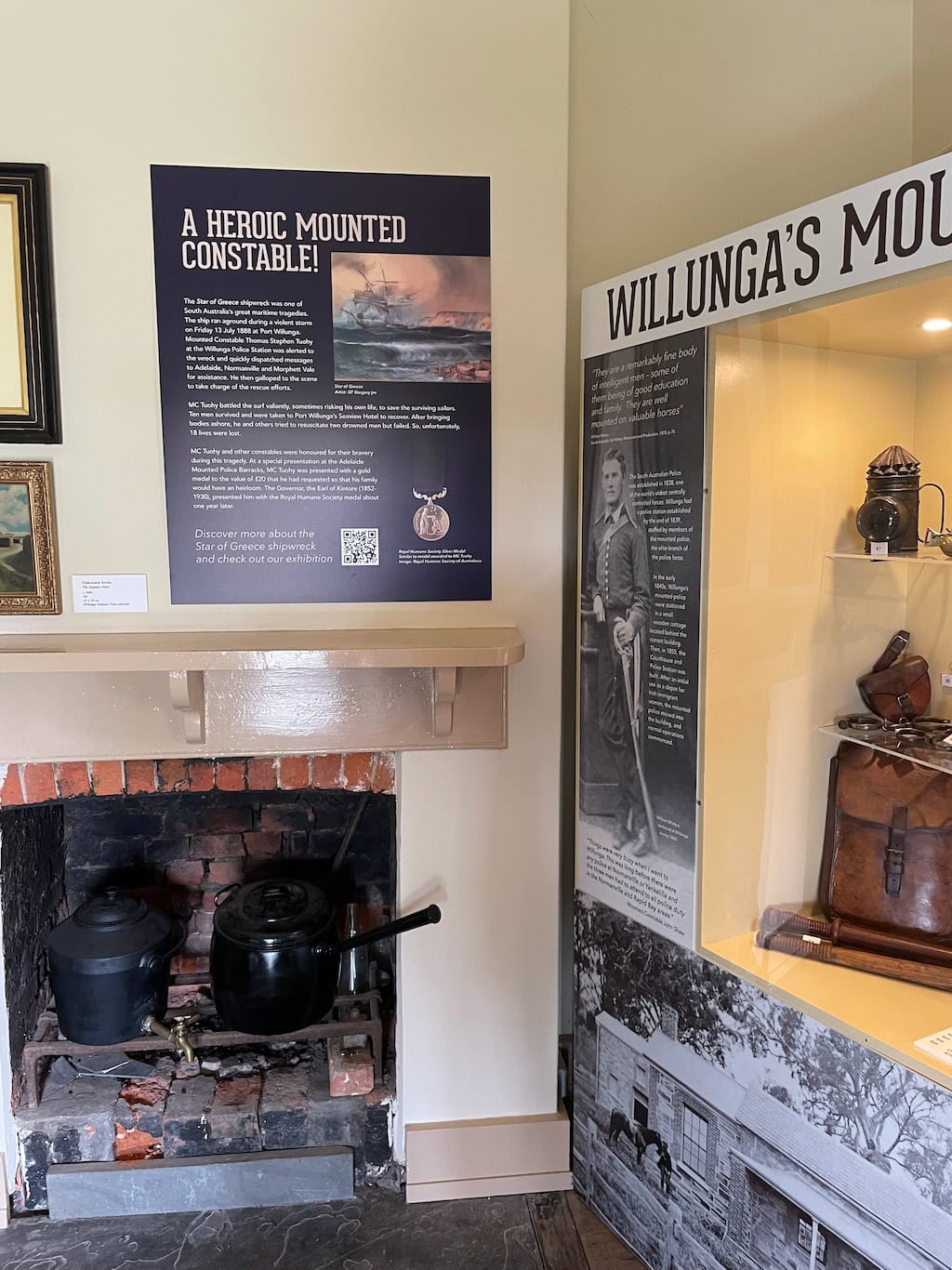
Is this correct grammar? Now, the Star of Greece shipwreck is definitely the star of the show here, literally! They’ve got these massive boards loaded with all the juicy details, so you’ll practically be an expert on the wreck by the time you leave. There is also some information on other wrecks, so it’s not all Star of Greece related, but the majority is.
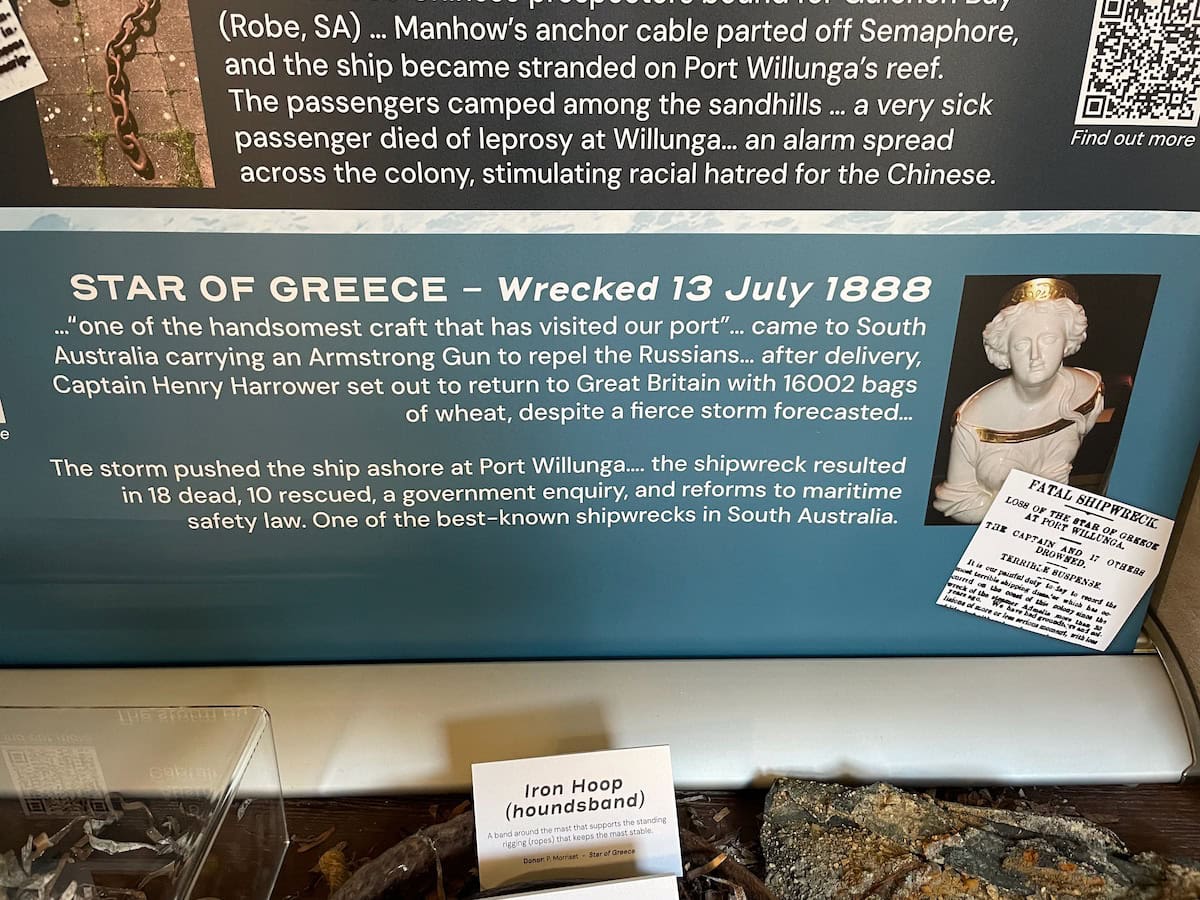
But hey, don’t just zoom in on the shipwreck stuff. You gotta check out the tiny courtroom – seriously, it feels like you’ve stepped onto a set from a classic cowboy movie! And there are some wild crime stories lurking around too, which you may find pretty fascinating. But yeah, if I’m being honest, that Star of Greece tale is really the showstopper for me.
7. Ino and Bacchus: Slate Carving Artwork
Alright, check this out! After leaving the Star of Greece cell we’re in the courtroom where there are some interesting books and pamphlets on a table. So, my Willunga museum tour guide was digging through some of the pamphlets, or maybe it was a book for sale, you know, just browsing. And BAM! He finds a pic of Bacchus and declares the God’s name!
My eyes totally bugged out — I was like, “Can I see it!” Then he drops the news that it’s in the Slate Museum, and because I was practically vibrating with eagerness, he volunteered to take me there. So here I am, standing right in front of Ino and Bacchus, but gah, my reflection is making it hard to see!
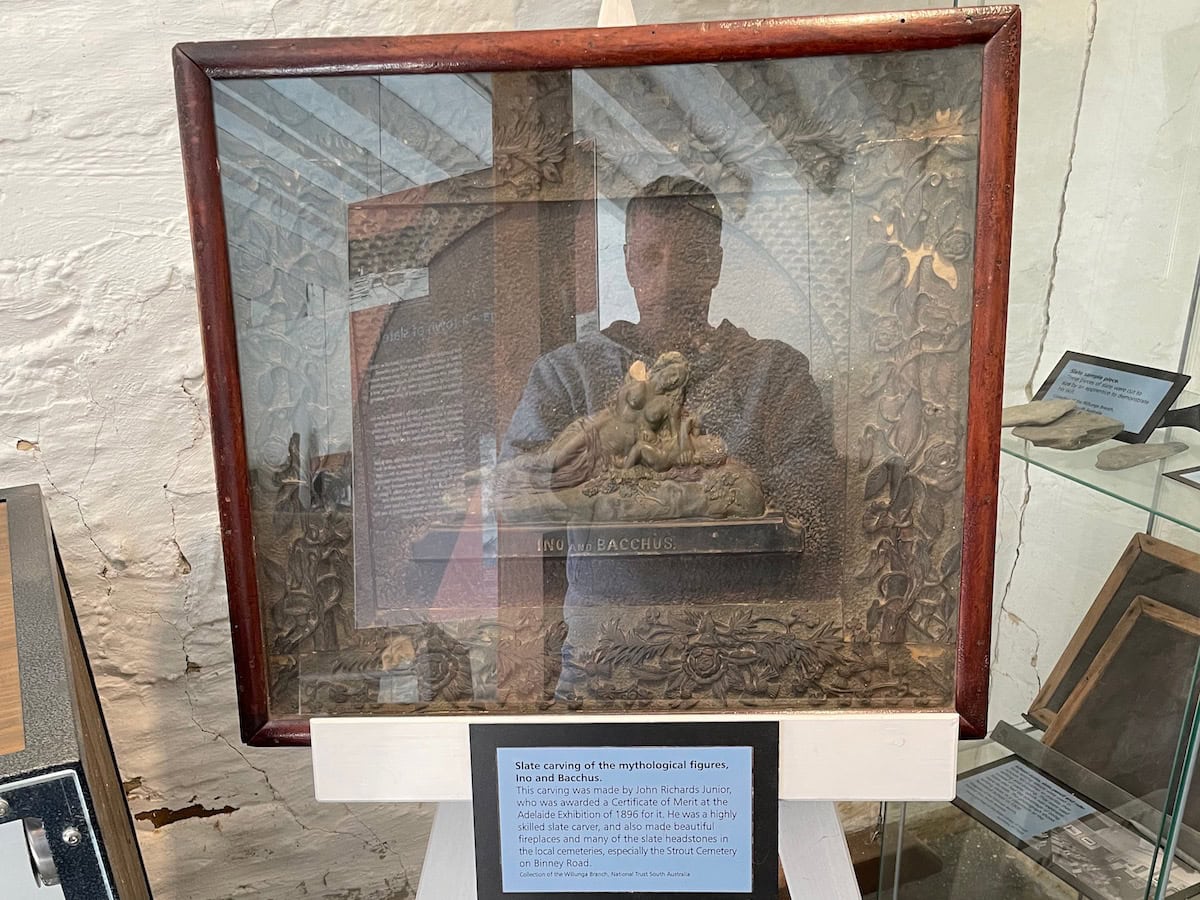
Glare begone! A quick request to my tour guide if he could close the door made all the difference. Feast your eyes on this significantly better photo of the stunning Ino and Bacchus slate carving inside the Slate museum.
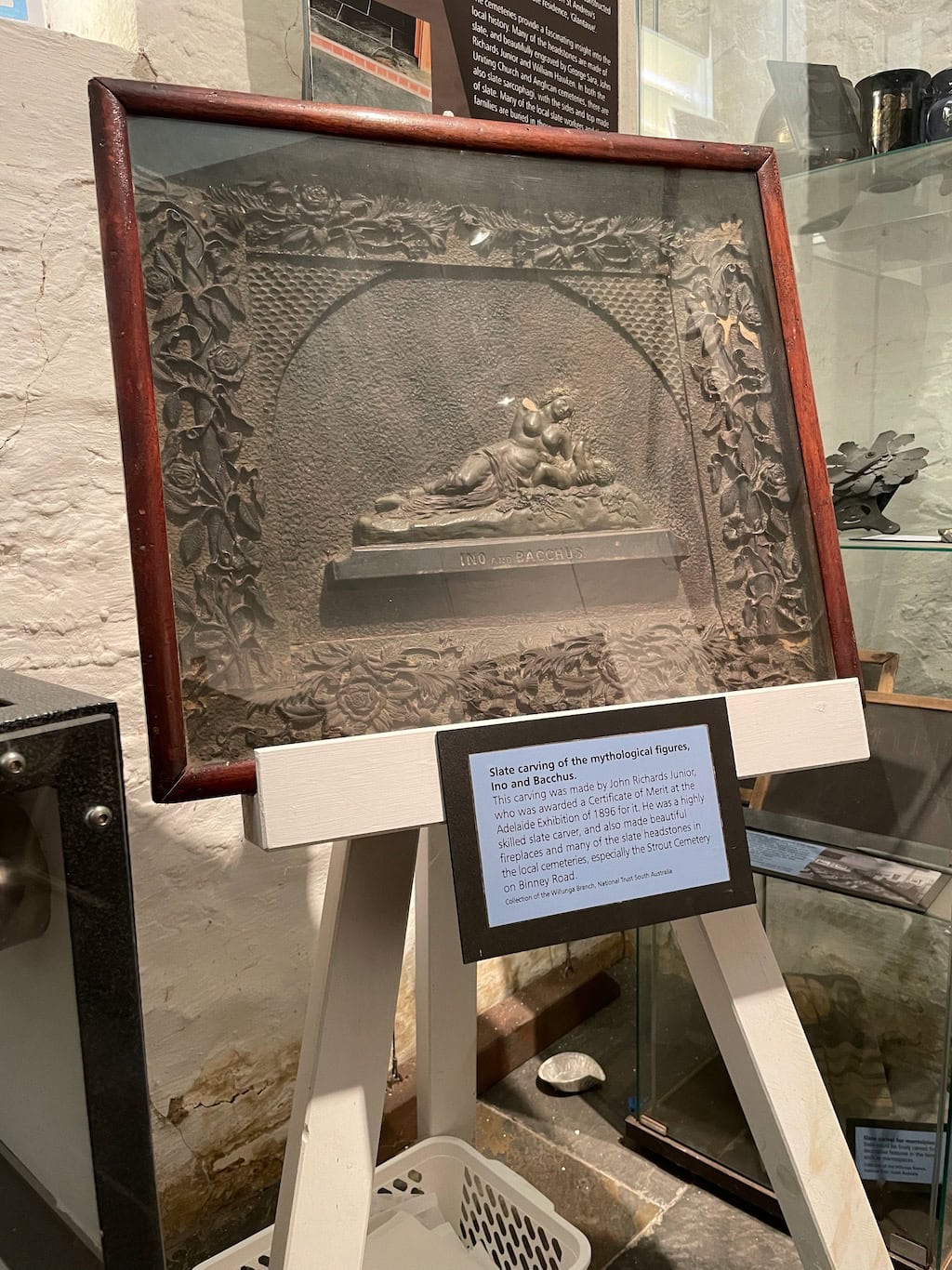
In the dramatic unfolding of Greek myth, Ino, sister of the divinely-impregnated Semele, became an unlikely champion for her nephew, Dionysus (Bacchus). When Semele perished in Zeus’s fiery glory, Ino didn’t falter. She embraced the role of protector, raising the young god and actively shielding him from the relentless fury of Hera, who sought his destruction.
The Bizarre Dionysus Myth: Turning Sailors into Dolphins
Interestingly, Bacchus, known to the Greeks as Dionysus, features in a compelling myth involving sailors aboard a ship.
Okay, so picture this: Dionysus, the party god of wine and good times, is chilling by the sea, feeling a bit adventurous. He spots a ship and decides to hitch a ride. But the sailors on board? Total jerks. They think he’s some rich kid they can kidnap and sell into slavery. Big mistake.
Dionysus, being Dionysus, isn’t about to let that slide. He starts doing some trippy god stuff – vines sprout from the deck, snakes slither around, and the ship fills with the sound of flutes. The sailors freak out, but it’s too late. Dionysus, in a fit of divine rage (or maybe just being dramatic), turns most of them into dolphins!
Only the helmsman, who had a good feeling about Dionysus and tried to stop the others, is spared. The rest? Swimming around as playful dolphins, forever reminded not to mess with a god, especially one who can turn your ship into a jungle and you into a fishy friend. It’s a wild story, right? Just goes to show, sometimes the sea is full of surprises, and not all of them are friendly.
Star of Greece: Willunga Museum
A guided tour of the Willunga museum will likely answer many of your questions about the shipwreck. A huge thanks to my amazing tour guide for giving me a great experience at the Willunga museum. He was a true gentleman!
But if your curiosity is further ignited and you hunger for more, Paul W. Simpson’s book, Star of Greece: For Profit and Glory, appears to be an excellent choice for a more in-depth exploration.
After your thrilling expedition through the Willunga Museum, where echoes of the past whisper secrets in the hallowed halls, prepare to embark on a different kind of quest – a culinary one! Descend the ancient-feeling High Street, a path that winds its way through time, until you discover a haven of refreshment: The Golden Fleece Cafe.
Yes, you read that right. The very name conjures images of legendary voyages and daring heroes. Just like the mythical ship that carried Jason and his Argonauts to the ends of the earth in pursuit of a fabled Golden Fleece, this cafe offers a chance to refuel and perhaps even plot your next adventure.
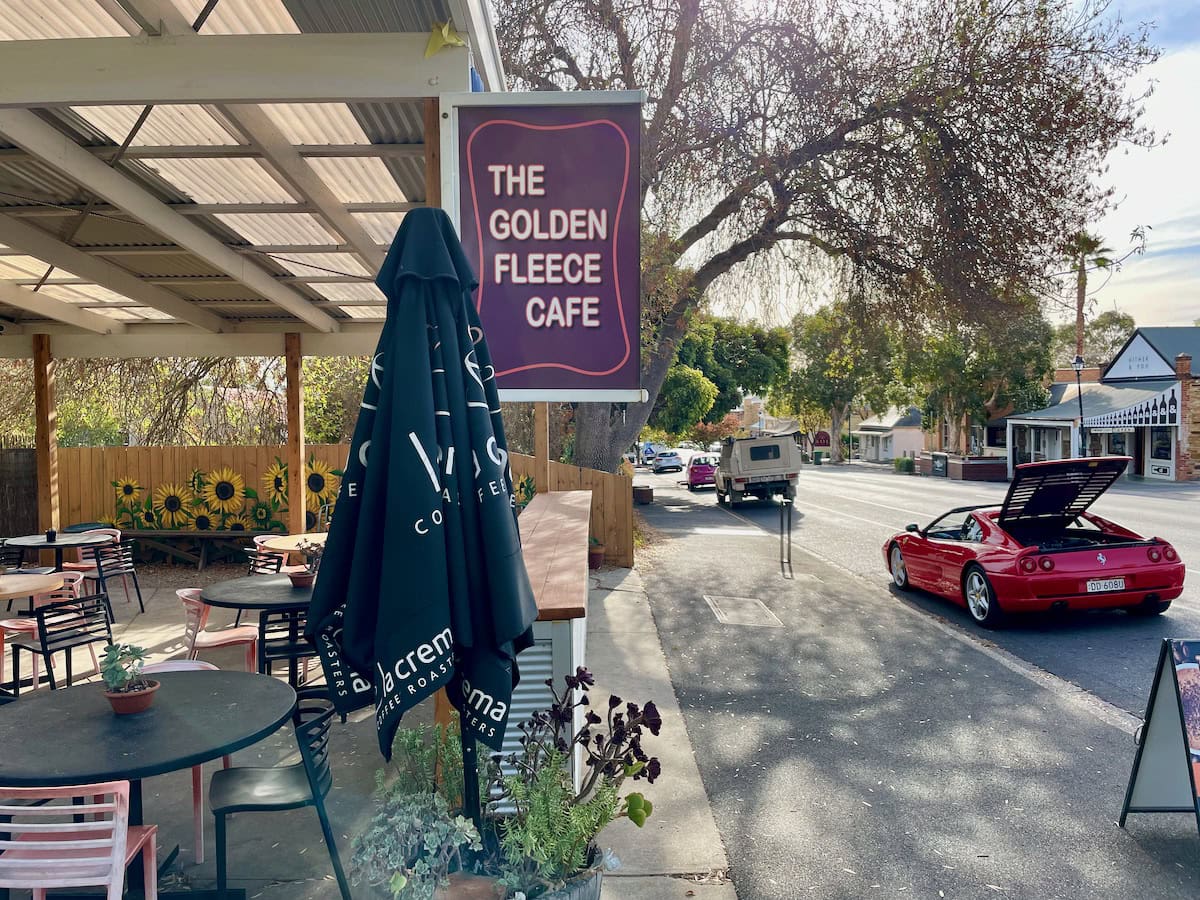
Nestled lower down on the same historic thoroughfare as the museum, The Golden Fleece beckons with promises of steaming coffee and tantalizing treats. The journey between these two points of interest is not a perilous one, but rather a pleasant stroll, allowing you to reflect on the mysteries you’ve uncovered and anticipate the delights that await. So, step through the doors of The Golden Fleece, and let your own Star of Greece odyssey begin.
Here’s a big tip, the town of Willunga is situated in a cool spot tucked away in the McLaren Vale wine region down in South Australia. Seriously, the wines are out of this world, and the scenery? Just breathtaking. Even Dionysus, the god of wine himself, would probably tell you it’s a must-visit destination if you’re in Adelaide. Make sure you put it on your list!
Pin it … Share it