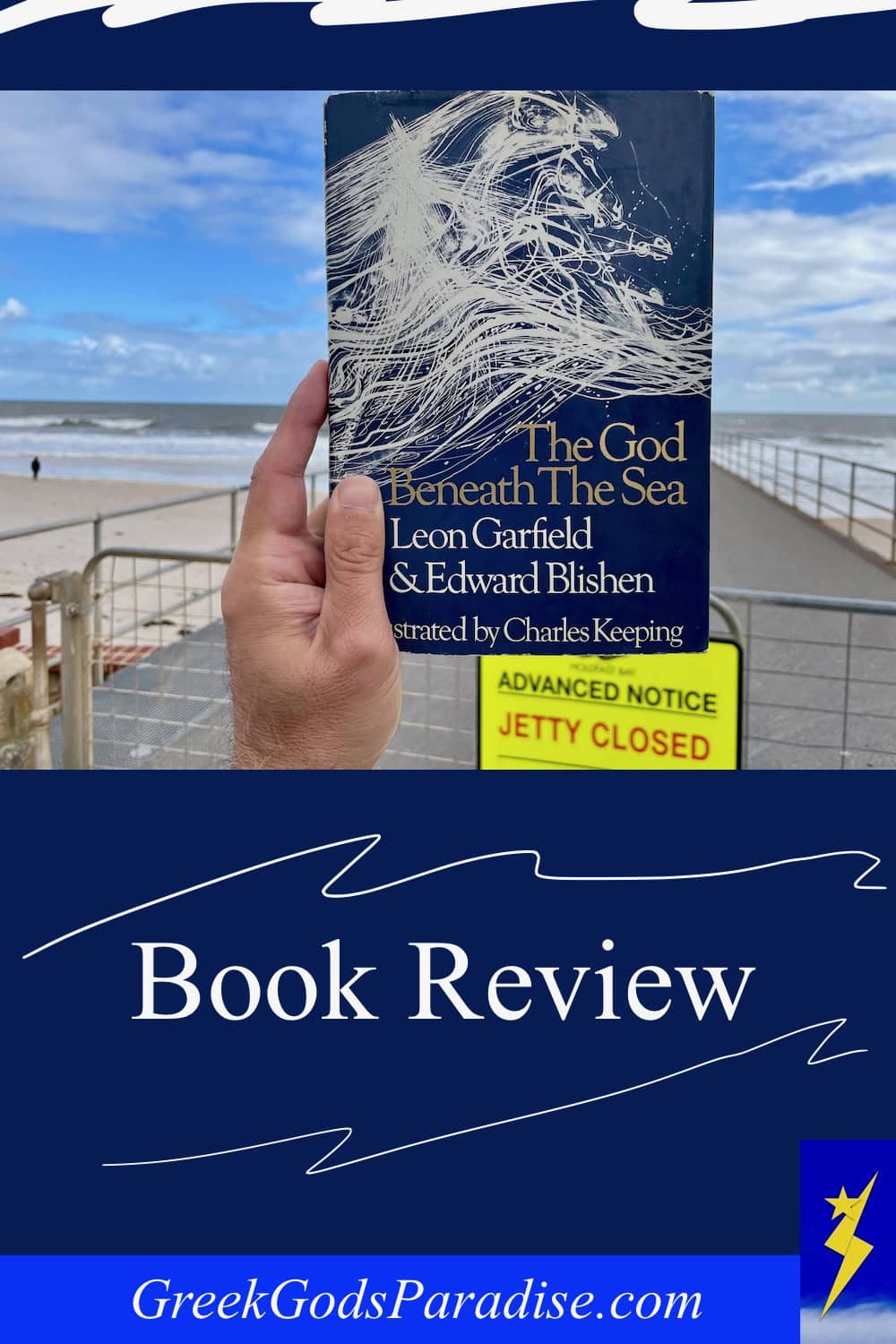


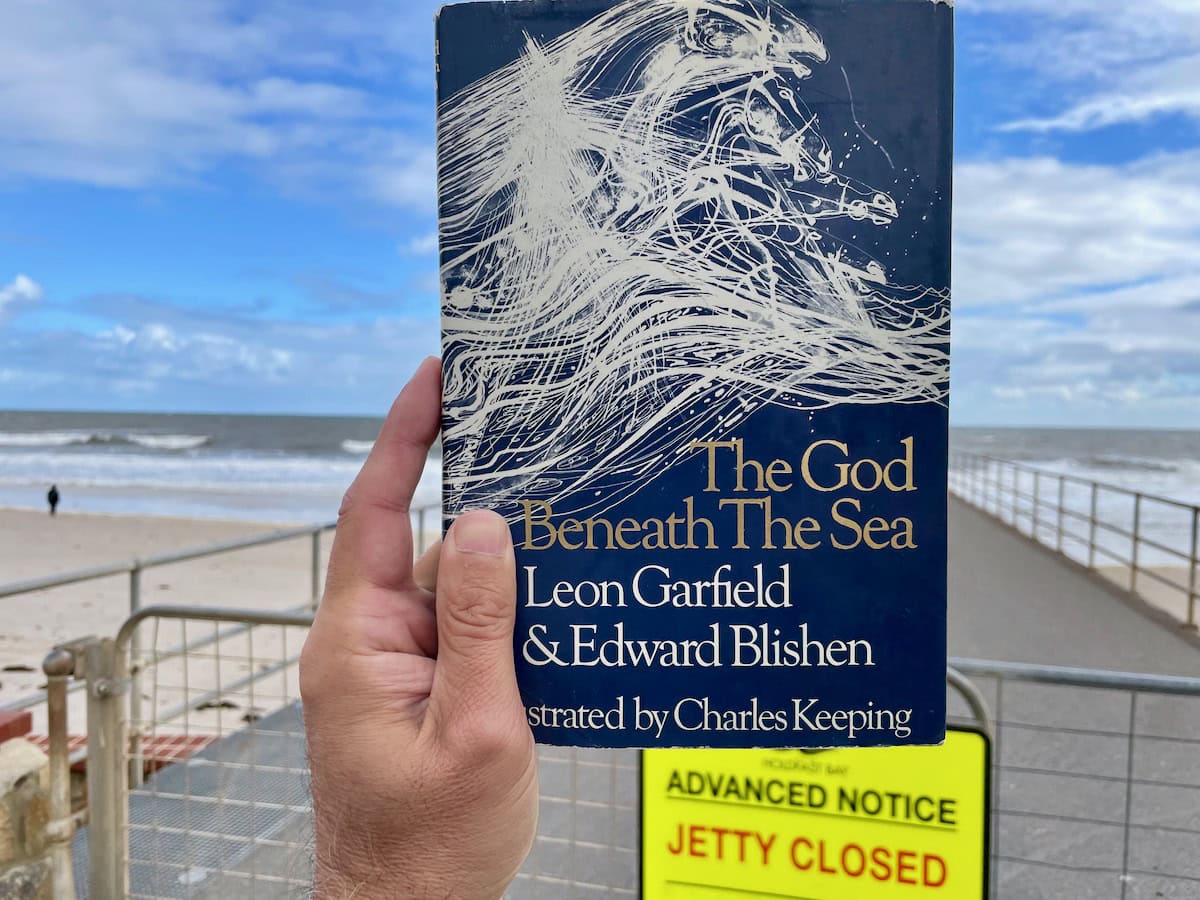
The God Beneath The Sea is a unique, all-in-one novel that brings together many Greek mythology stories through a continuous narrative. Written by Leon Garfield and Edward Blishen, with illustrations by Charles Keeping, this classic book was originally published in the United Kingdom by Longman in 1970 and even won the prestigious Carnegie Medal. It’s a bold attempt to bring the rich and complex world of Greek gods, Titans, and mythological legends into one engaging story.
The novel starts with the story of Hephaestus, the god beneath the sea, who was born and cast out from Mount Olympus by his mother Hera. Raised in a grotto by the gentle goddesses Thetis and Eurynome, Hephaestus learns about the creation of the world and the origins of the Greek gods through their storytelling.
As the story unfolds, readers are introduced to the Olympian gods — Zeus, Hera, Demeter, Apollo, Hermes, Ares, Hephaestus, Poseidon, Hades, Aphrodite — and get an inside look at their origins, myths, conflicts, and divine dramas.
The God Beneath The Sea: Review
The Gods Beneath The Sea covers all the big moments in Greek mythology — things like the Titan gods, how the Olympians came to be, and legendary stories from the Age of Gods and Mortals. You’ll get the scoop on famous myths like Prometheus giving fire to humans, plus the cool creation myth of mankind and how Pandora ended up in the world. Throughout, you’ll see themes of rebellion, divine power, and heroism woven into these epic tales.
Reading The God Beneath The Sea is like embarking on an epic mythological journey through the ancient world and Mount Olympus, complete with the usual ups and downs. The story is divided into three parts: Part I — The Making of the Gods, Part II — The Making of Men, and Part III — Gods and Men. While the overall flow is smooth, some sections felt a bit flat or difficult to get into, but overall, it offers a fascinating dive into Greek mythology.
The Prometheus myth was well-crafted at the beginning, but its impact waned as it progressed. On the other hand, I really enjoyed the adventures of Hermes, which felt fresh and lively. However, by the time I reached the Sisyphus story, I started to feel a bit lost, as the narrative became harder to follow.
The third part, “Gods and Men,” even recounts stories like Lycaon turning into a wolf after disrespecting Zeus, the resulting great flood, and Prometheus warning Deucalion to survive the deluge. It details how Deucalion and Pyrrha repopulate the earth by casting stones that turn into people.
The myth of Persephone’s kidnapping by Hades and Demeter’s search for her is also covered in this book — so there’s a lot packed into this Greek mythology novel.
Overall, I’d give The God Beneath The Sea a 6.5 out of 10. This 168-page book is packed with Greek myths and legendary stories, though some sections felt a bit too lengthy or detailed for my taste, prompting me to skim through those parts. Despite that, it’s a great resource for anyone interested in Greek mythology or seeking a retelling that covers the entire mythos in one volume. I was impressed by how the author weaves these stories into such a cohesive narrative. The book even has a sequel, The Golden Shadow, which explores myths from the heroic age when divine activity was less prominent.
Who would I recommend this for? Despite some sources suggesting it’s suitable for children, I believe The God Beneath The Sea is better suited for older readers or mythology enthusiasts looking for a thorough and fresh retelling of Greek myths. It’s a solid choice if you’re into Greek gods, Titans, Olympians, and legendary figures like Cyclopes, Fates, and Furies. The book also offers new perspectives on stories about Prometheus, Zeus, and others — giving a unique and personal spin on Greek mythology. If that sounds like your thing, definitely check it out!
Check Price & Availability: The God Beneath The Sea
Then again, you can always opt for a more traditional Greek mythology book that breaks the stories into smaller segments and includes great illustrations. That’s an area where The God Beneath The Sea falls a bit short. To me, the illustrations are just black-and-white scribbles. That’s just my opinion, though.
I prefer books like Gustav Schwab’s Greek Myths, PANTHEON, or The Gods of Olympus because they’re easier and more fun to read. If you want a great fictional novel, The Immortal by Christopher Pike is a really good choice!
Pin it … Share it