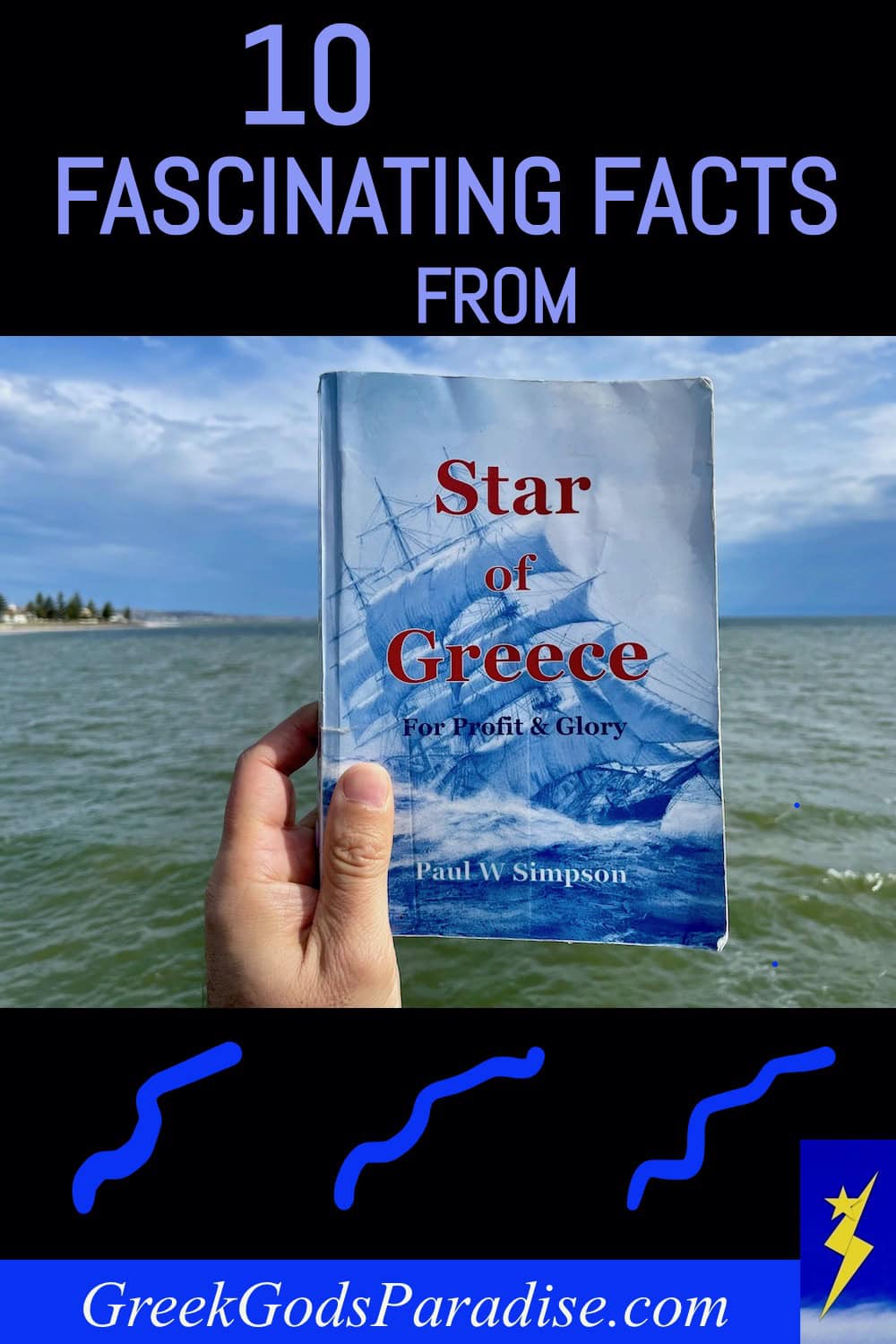



The story of the Star of Greece is one full of tragedy, adventure, and maritime history. Having spent many enjoyable days near the Star of Greece Shipwreck at Port Willunga Beach — the spot in South Australia where the Star of Greece was wrecked in 1888 — and having done a few snorkel dives exploring the shipwreck, I’ve developed a pretty personal connection to this legendary vessel. If you’re interested in seeing or experiencing the wreck firsthand, check out my Star of Greece shipwreck snorkel-dive guide.
So, what’s a better way to feed my curiosity about this tragedy than reading a book called Star of Greece: For Profit & Glory by Paul W. Simpson? From what I know, it’s supposed to be one of the best books about the Star of Greece. So, what did I learn? Well, the sinking of the Star of Greece isn’t just a sad story of lives lost. It actually became an important part of local history and maritime legends. Simpson’s book takes a close look at the ship’s journey, its drive to make money, and the relentless push for glory that eventually led to its wreck.
In this post, I’ll share 10 fascinating facts from the Star of Greece’s story shown in the book — details that make this wreck a symbol of tragedy and power. Whether you’re a local or a curious visitor to the Port Willunga coastline where it all happened, these insights will hopefully give you a better understanding of the incredible history of the Star of Greece — a tragic chapter in Australian maritime history.
Star of Greece: For Power & Glory — 10 Interesting Facts
1. The Star of Greece ran into some serious trouble in the early hours of Friday the 13th, July 1888. Sadly, 18 people on board lost their lives. And here’s the crazy part — that’s Friday the 13th, the day a lot of people consider super unlucky! The 888 part also seems to be pretty symbolic…
2. Originally, there was some talk of naming the ship the Queen of Greece instead of the Star of Greece. However, since several other ships in the fleet already had names starting with “Star,” they decided to go with the original naming convention. The ship, an impressive iron clipper, was officially christened on Saturday, September 19th, 1868, at the slipway on Queen Island in Belfast, Northern Ireland — a major hub for shipbuilding at the time.
3. In Calcutta, Captain Legg and his officers were graciously invited to a series of dinners and social gatherings hosted by local Greek jute mill merchants. The Star of Greece clipper had earned a reputation for its speed, setting records for sailing between London and Calcutta. In recognition of its achievements, the Greek merchants gifted Captain Legg a silk flag representing the Kingdom of Greece, along with a beautifully carved wooden panel that was mounted inside the saloon. The Greek community in Calcutta had been there since the early 1700s. By the late 19th century, around 120 families were involved in trade, many of whom became quite prosperous and made significant contributions to the local economy and culture.
4. In South Australia, the Star of Greece underwent some modifications — iron mounts and braces were added to securely support a massive wooden crate housing a 24-ton gun and its mountings. This formidable piece of artillery was ordered for a coastal fort overlooking the Adelaide foreshore at Glenelg, but the fort was never built. The gun itself was an Armstrong BL 9.2-inch Mark VI breech-loading cannon, capable of reaching approximately 8,200 meters. Although it was never installed, its impressive range and firepower showed how serious it could have been for coastal defense.
5. At the top of page 199, in Star of Greece: For Profit & Glory, it states: “Instead the hand of Neptune carried the Star of Greece into a narrow gap between Lion Reef and the Headland overlooking Gull Rock.” Personal Note: Clearly, the Greek god Poseidon (Neptune) must have been responsible for sinking the ship.
6. The first victims of the Star of Greece were three pigs, swept away along with their sty in the raging sea.
7. Some bodies were never recovered, including that of a man named John Gatis, who was said to be 50 (definitely sounds like a Greek guy). But over the following weeks, various unidentifiable body parts washed up along the stretch between Port Willunga and Maslin’s Beach.
8. The beautiful Grecian Lady figurehead, salvaged from the ill-fated Star of Greece, now stands on display at the Port Adelaide Maritime Museum. Like a guardian sent by Hera herself, she serves as a solemn tribute to the sailors lost and the mighty forces of nature that claimed the vessel — reminding us of the legendary journeys of Jason and the Argonauts, and Poseidon’s watchful eye over those brave enough to sail the stormy seas. You can also find more Star of Greece wreckage at the Willunga Museum.
9. A Trotman’s anchor, one of many salvaged from the Star of Greece, now stands proudly at the forefront of the Mariners Memorial in Semaphore, another coastal town in Adelaide, South Australia.
10. There were only 10 survivors from the Star of Greece. Sadly, 18 people on board the ship at the time lost their lives in the tragedy. A monument now stands in Aldinga Cemetery, commemorating the mass grave of those recovered after the wreck on July 13th, 1888. Erected in 1889, the year after, it serves as a lasting tribute to the lives lost at sea.
Check Price & Availability: Star of Greece: For Profit & Glory
Pin it … Share it